Follow us

Search
For health professionalsContact usPress Enter to search. For products, try the shop filter.
 (08) 6110 0570
 admin@pdchealthhub.com.au
Press Enter to search. For products, try the shop filter.
(08) 6110 0570admin@pdchealthhub.com.auA sprain or strain is an injury to a ligament, muscle or tendon. Most settle with a few days of protection then early, guided loading, and physiotherapy can show you how.
A sprain is an injury to a ligament, the tough band that joins one bone to another, and a strain is an injury to a muscle or tendon.1 Ankles, knees, wrists, hamstrings and the back are common sites, and the usual signs are pain, swelling, bruising and trouble using the area.1 Many people recover within a few weeks. Examples such as lateral ankle sprains and hamstring strains average around two to three weeks, although severity and the joint involved change this.2 Some ankle and foot injuries that look like sprains are actually broken bones, so a quick clinical check using the Ottawa ankle rules decides whether an x-ray is needed.56
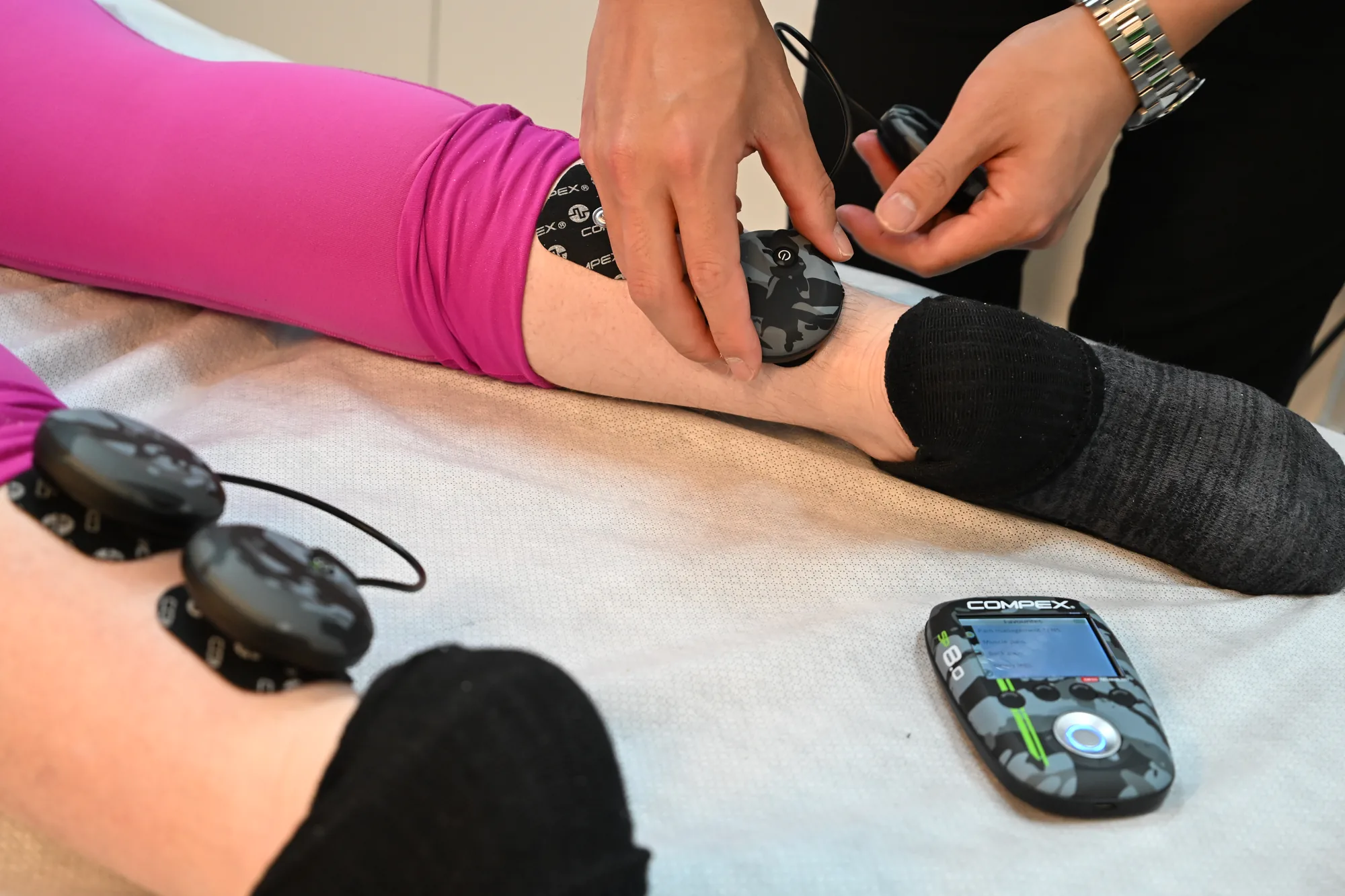
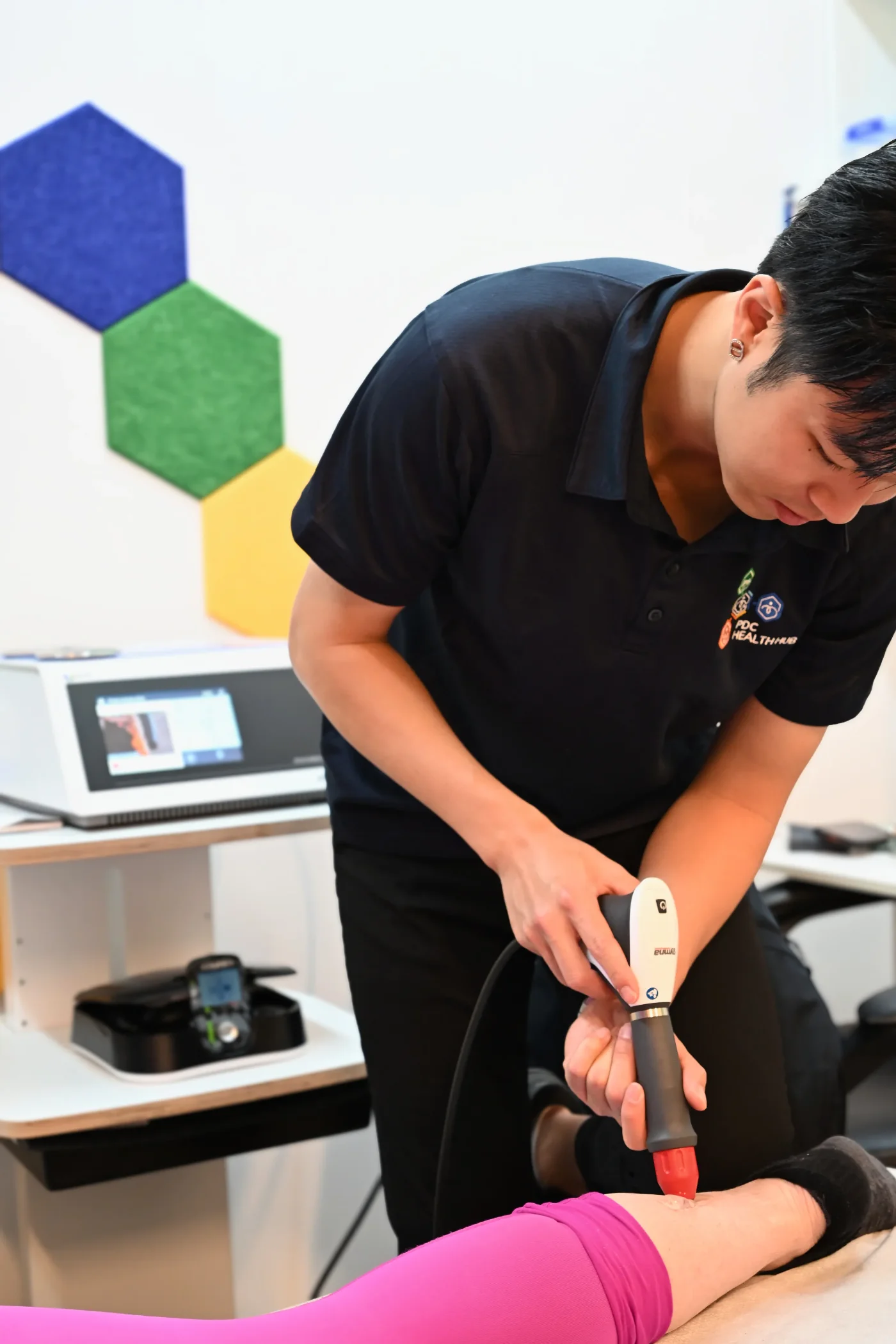
Current sports medicine advice has moved on from rest, ice, compression and elevation (RICE). The PEACE and LOVE approach suggests protecting the injury for the first one to three days, then adding load early and gradually, because prolonged rest can weaken healing tissue.3 The physiotherapy guideline for lateral ankle sprains recommends progressive weight bearing, external support such as a brace or tape, and a structured exercise program with balance and strength training.4 It advises against therapeutic ultrasound for acute ankle sprains.4 Your physiotherapist adjusts timing to your injury and goals, and recovery varies from person to person.
PHOTO NEEDED · Add a Hero Image to this condition in the CMS: a PDC clinician with a client, natural light, no identifiable health information on screen
Symptoms are a guide, not a diagnosis. Your GP confirms the diagnosis; our team helps you manage it day to day.
The teams and services that most often support people with this condition. They work from one shared plan, and one GP referral reaches all of them.
Our care draws on the JOSPT 2021 lateral ankle ligament sprain clinical practice guideline, the Ottawa ankle rules and the PEACE and LOVE framework for soft-tissue injuries.
RICE (rest, ice, compression, elevation) has largely been replaced in sports medicine by PEACE and LOVE. That means protecting the injury for one to three days, then loading early as pain allows. Ask your doctor or pharmacist about pain relief, as anti-inflammatories may not suit everyone.
Not always. The Ottawa ankle rules suggest an x-ray if you have ankle pain and tenderness over the back edge or tip of either ankle bone, tenderness over two particular midfoot bones, or you cannot take four steps. A clinician needs to examine you to apply them.
It varies. Lateral ankle sprains average about two and a half weeks and hamstring strains about three weeks, but severity, the area injured and your activity all matter. Gradual loading, rather than prolonged rest, is generally advised for recovery.
Book an assessment if you cannot put weight on the limb, swelling or pain is significant, or it is not improving after about a week. We check for fracture, start a guided program and explain what you can safely keep doing.
No referral is needed for private appointments. With a GP Chronic Condition Management Plan, Medicare rebates apply to up to five eligible allied health services a calendar year. Private health extras and workers compensation (WorkCover WA) commonly cover sports and work injuries.
Tell us what is going on and we will point you to the right discipline, or to more than one. Most people start with a single appointment and leave with a plan the rest of the team can see.
Or go straight to a service
Phone (08) 6110 0570 · Medicare, NDIS, DVA and private options across our services
For GPs and health professionals
Send an online referral in under two minutes. One referral reaches every discipline at PDC Health Hub.
