Follow us

Search
For health professionalsContact usPress Enter to search. For products, try the shop filter.
 (08) 6110 0570
 admin@pdchealthhub.com.au
Press Enter to search. For products, try the shop filter.
(08) 6110 0570admin@pdchealthhub.com.auShin splints is pain along the inner edge of the shinbone from running or jumping, and it usually settles with managed training load. Sharp, persistent pain needs checking for a stress fracture.
Shin splints (medial tibial stress syndrome, or MTSS) is pain along the inner edge of the shinbone, brought on by repeated stress from running, jumping or a sudden jump in training.1 The pain is usually a dull ache that is worse with activity and eases with rest.1 Hard surfaces, unsupportive footwear and foot structure can add to the load.1 Other causes can look similar, such as a bone stress injury (stress fracture) and compartment syndrome, so pain that is severe or lasts beyond a few days should be assessed.2 If a bone stress injury is suspected, an x-ray is the usual first image and MRI may confirm and grade it.4
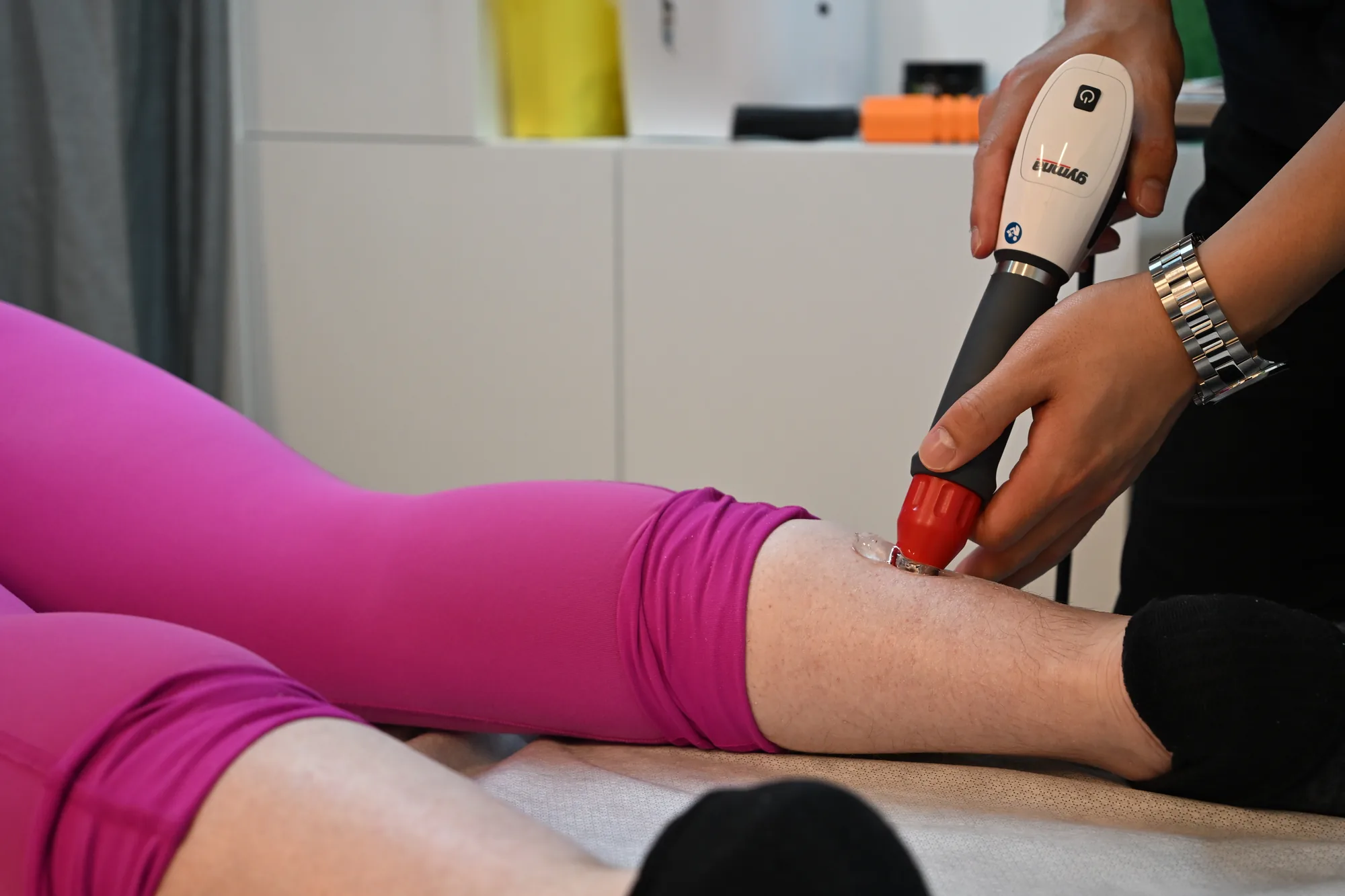
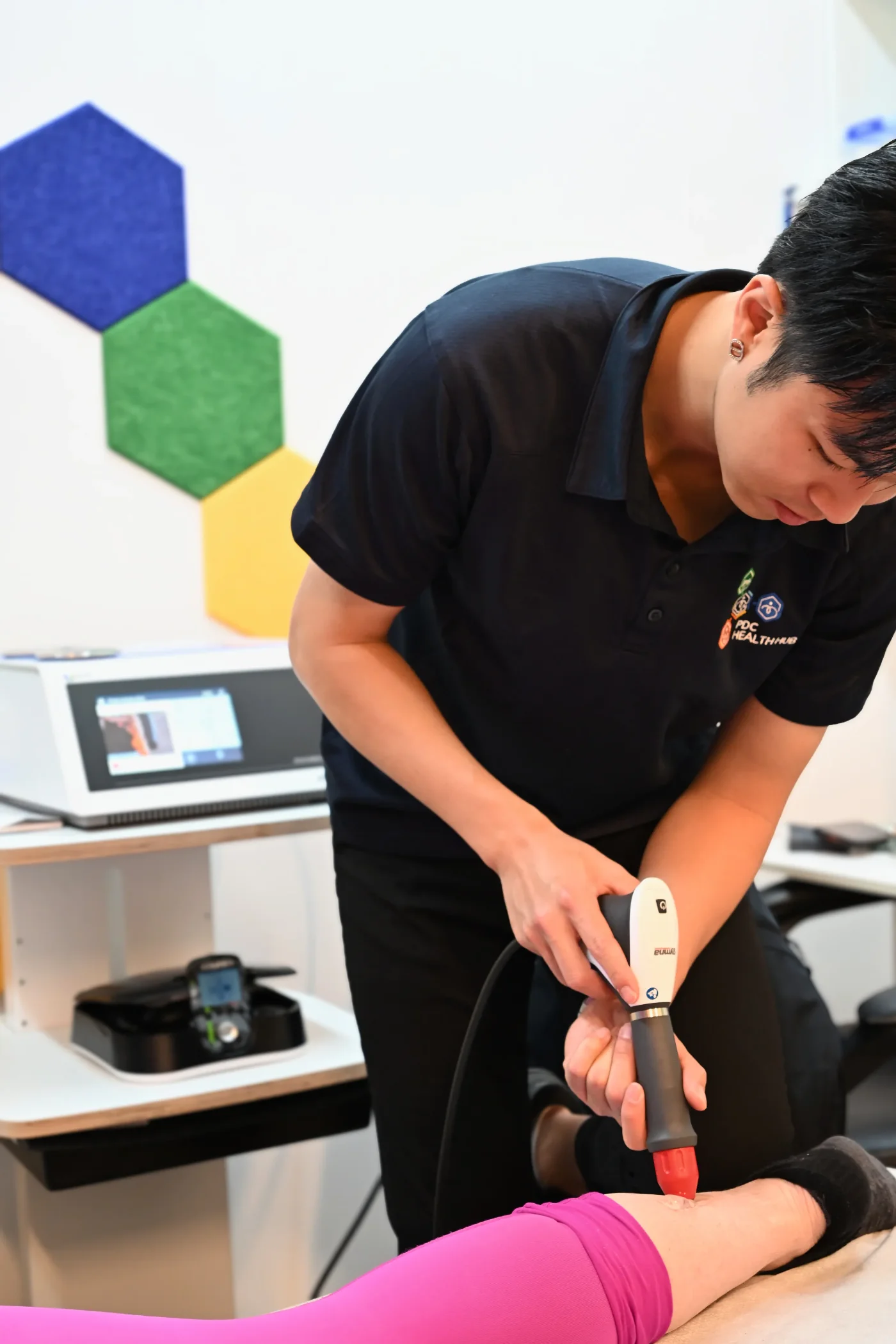
Physiotherapy starts with confirming the diagnosis and working out why the load on your shin has outgrown what it can tolerate. Care usually centres on temporarily reducing or changing running and jumping, using lower-impact exercise such as swimming meanwhile, then rebuilding load in steps.2 We also review footwear, running technique and strength. Foot orthoses have been studied, but the quality of the studies is poor, so we use them selectively. Shockwave therapy may also be added in selected cases, alongside load management and exercise rather than on its own.3 Scans are not needed routinely.3 Recovery time varies, and return to sport is guided by symptoms, not the calendar.
PHOTO NEEDED · Add a Hero Image to this condition in the CMS: a PDC clinician with a client, natural light, no identifiable health information on screen
Symptoms are a guide, not a diagnosis. Your GP confirms the diagnosis; our team helps you manage it day to day.
The teams and services that most often support people with this condition. They work from one shared plan, and one GP referral reaches all of them.
Our care follows current physiotherapy and sports medicine evidence for medial tibial stress syndrome and bone stress injury, alongside Australian public guidance from Healthdirect.
Most people need to reduce or change running and jumping for a period, substitute lower-impact exercise, then rebuild load gradually. A physiotherapist can find the training or strength factors behind it and guide you back. Foot orthoses have limited evidence. Shockwave therapy may be added selectively, alongside rather than instead of load management and exercise.
They can feel similar. A stress fracture or another cause may need to be ruled out if pain is severe, tender over a small spot of the bone (less than about 5 cm), brought on by hopping, or not easing after a few days of rest. A physiotherapist or doctor can examine you and advise if imaging is needed.
Often you can stay active with swimming or cycling, but running usually needs reducing or pausing while pain settles. Stop and seek review if pain becomes sharp, worsens or is present at rest. We set a safe, step-by-step return plan with you.
Not usually. Shin splints is generally diagnosed from your history and examination. If a bone stress injury is suspected, an x-ray is the usual first test and MRI may follow to confirm and grade it. We advise which applies to you.
No referral is needed for private appointments. With a GP Chronic Condition Management Plan, Medicare rebates apply to up to five eligible allied health services a calendar year. Private health extras often cover physiotherapy for sports injuries, and workers compensation may apply if the injury is work related.
Tell us what is going on and we will point you to the right discipline, or to more than one. Most people start with a single appointment and leave with a plan the rest of the team can see.
Or go straight to a service
Phone (08) 6110 0570 · Medicare, NDIS, DVA and private options across our services
For GPs and health professionals
Send an online referral in under two minutes. One referral reaches every discipline at PDC Health Hub.
