Follow us

Search
For health professionalsContact usPress Enter to search. For products, try the shop filter.
 (08) 6110 0570
 admin@pdchealthhub.com.au
Press Enter to search. For products, try the shop filter.
(08) 6110 0570admin@pdchealthhub.com.auMost neck pain is not caused by serious disease and does not need a scan. Gentle movement, hands-on therapy and an exercise plan help you get moving again.
Neck pain is very common and is usually non-specific, meaning it is not caused by serious disease. Everyday triggers include poor posture, an unsupportive pillow, long hours at a computer, muscle strains and stress.1 Serious causes such as infection, nerve compression or tumours are uncommon; a 2025 German clinical practice guideline puts them at fewer than 1% of cases.2 Imaging is not needed for most people.1 Neck pain can sometimes spread into the shoulder or arm, or be linked to headaches arising from the neck (cervicogenic headache), so we assess the neck, upper back and shoulder together.3
Physiotherapy for neck pain centres on keeping you active. Exercise and education are central to care, and hands-on therapy is sometimes added alongside them.4 The German guideline recommends physical activity and exercise, rates education as moderately helpful, and discourages traction, electrotherapy and immobilisation.2 The 2017 JOSPT guideline matches treatment to the type of neck pain and how irritable it is, rather than using one approach for everyone.3
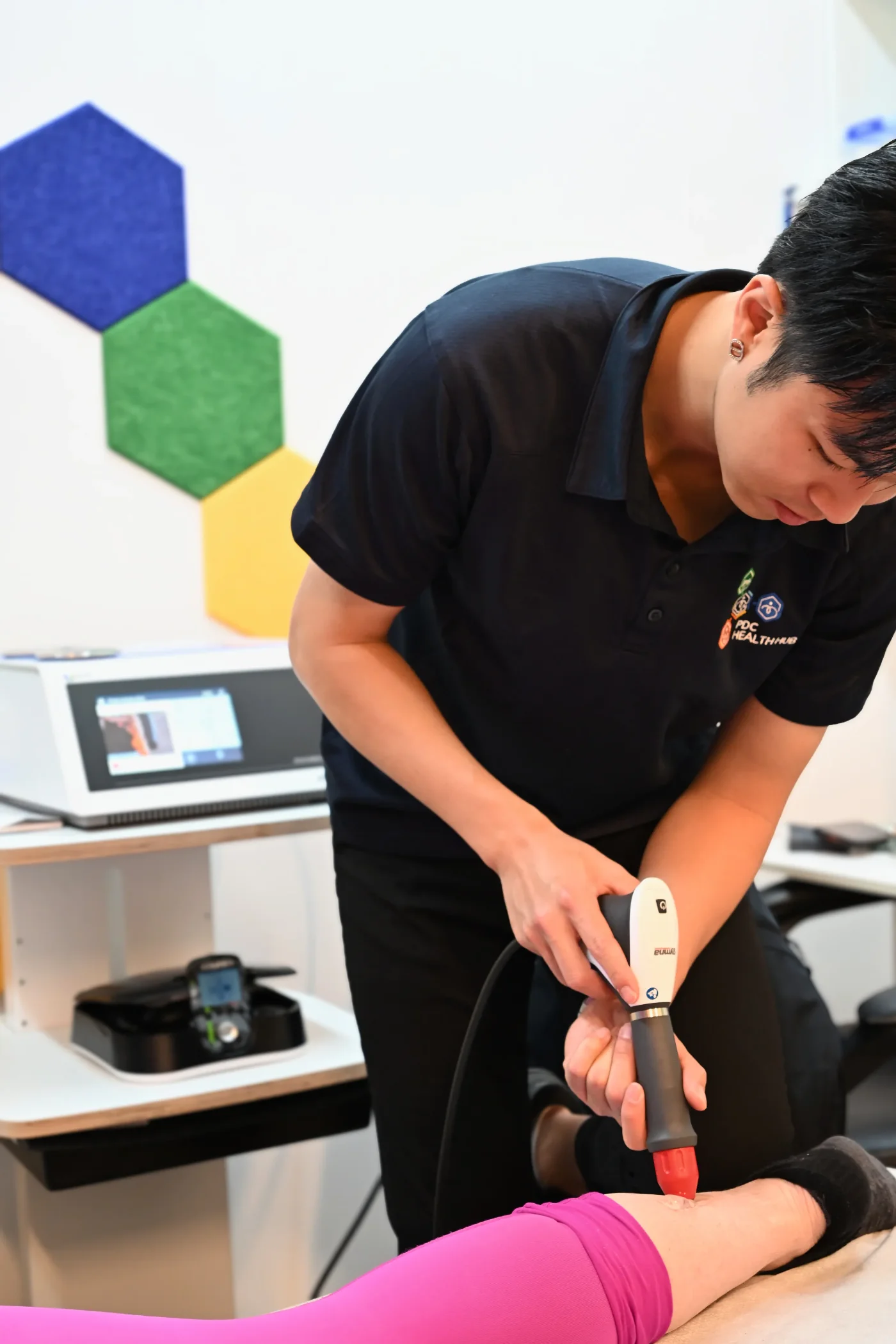
PHOTO NEEDED · Add a Hero Image to this condition in the CMS: a PDC clinician with a client, natural light, no identifiable health information on screen
Symptoms are a guide, not a diagnosis. Your GP confirms the diagnosis; our team helps you manage it day to day.
The teams and services that most often support people with this condition. They work from one shared plan, and one GP referral reaches all of them.
Our neck pain care follows current Australian physiotherapy guidance, with international clinical practice guidelines used where Australian guidance is limited.
Not for most people. Imaging is usually only needed to investigate a suspected specific cause, such as a nerve problem or a serious condition.<sup>1</sup> We will refer you to your GP for imaging if your symptoms or examination suggest it would help.
Usually no. Healthdirect advises staying active and moving your neck gently and naturally, unless the pain followed an injury or accident, in which case get it checked promptly.<sup>1</sup> The German guideline discourages immobilisation.<sup>2</sup>
Yes, it can. Neck problems can refer pain into the head, shoulder and arm.<sup>3</sup> We assess where your symptoms come from. Numbness, weakness or symptoms that are worsening need prompt medical review.
It varies. Many episodes settle with gentle movement and self-care, but Healthdirect advises seeing a doctor if pain is severe, worsening or lasts beyond a few weeks.<sup>1</sup> We review your progress and adjust your program as you recover.
No referral is needed for private appointments. With a GP Chronic Condition Management Plan, Medicare rebates apply to up to five eligible allied health services a calendar year. Neck pain from a work injury may be covered by workers compensation, and private health extras can also apply.
Tell us what is going on and we will point you to the right discipline, or to more than one. Most people start with a single appointment and leave with a plan the rest of the team can see.
Or go straight to a service
Phone (08) 6110 0570 · Medicare, NDIS, DVA and private options across our services
For GPs and health professionals
Send an online referral in under two minutes. One referral reaches every discipline at PDC Health Hub.
