Follow us

Search
For health professionalsContact usPress Enter to search. For products, try the shop filter.
 (08) 6110 0570
 admin@pdchealthhub.com.au
Press Enter to search. For products, try the shop filter.
(08) 6110 0570admin@pdchealthhub.com.auA hamstring or calf injury is a strain or tear in the muscles at the back of the thigh or lower leg, usually felt as sudden pain during a sprint, a kick, a jump or a fast change of direction.
A hamstring strain is an overstretch or tear in the three muscles at the back of the thigh, and a calf strain is the same kind of injury in the gastrocnemius or soleus at the back of the lower leg.1,2,4 Both usually happen when a contracting muscle is forced to lengthen: sprinting, kicking, a sudden change of direction, or a fast start and stop in sports like tennis and squash.1,2 Grading runs in three broad steps. A mild grade one is minor fibre damage, a grade two is a partial tear with weakness and limping, and a grade three is a severe or complete rupture that may need surgery.1,2
Sports Medicine Australia's general guide is around three weeks away from sport for a mild hamstring strain and at least four to eight weeks for a moderate one.1,2 Most soft tissue injuries settle within one to six weeks.3 Returning early, or with rehabilitation left unfinished, raises the risk of doing it again, a previous hamstring injury is itself a proven risk factor for the next one, and recurrence after a calf tear is common.1,2 A painful, swollen, warm or discoloured calf can be a blood clot, a medical emergency.4,5 PDC physiotherapists run the loading program and the testing before clearance, and can refer you directly for imaging.
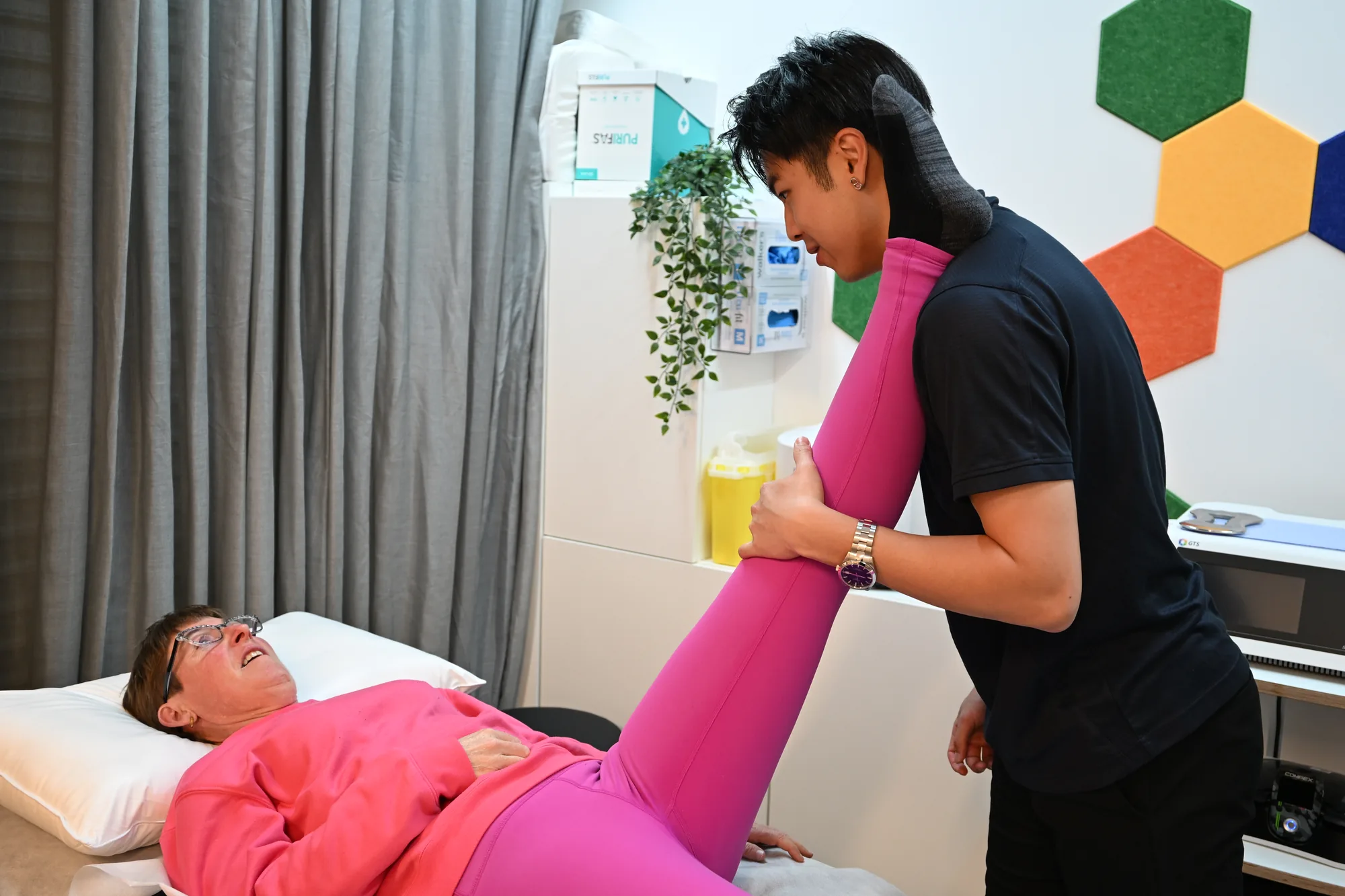
PHOTO NEEDED · Add a Hero Image to this condition in the CMS: a PDC clinician with a client, natural light, no identifiable health information on screen
Symptoms are a guide, not a diagnosis. Your GP confirms the diagnosis; our team helps you manage it day to day.
The teams and services that most often support people with this condition. They work from one shared plan, and one GP referral reaches all of them.
This page follows Australian guidance, mainly the Sports Medicine Australia injury fact sheets for hamstring strain, calf strain and soft tissue injuries, with healthdirect Australia for calf pain and for deep vein thrombosis.
It depends on the grade. Sports Medicine Australia's guide is around three weeks for a mild hamstring strain, at least four to eight weeks for a moderate one, and around three months of rehabilitation if a severe tear needs surgery. For calf strains the guide is roughly ten to twelve days for a mild one and sixteen to twenty one days for a moderate one. These are general guides, not promises, and your timeline depends on what you are going back to.
Sports Medicine Australia recommends RICER for the first 48 to 72 hours: rest, ice, compression, elevation and referral, with ice for 20 minutes every two hours and never directly on the skin. Just as important is No HARM, which means no heat, no alcohol, no running or activity and no massage in that window. Then get it assessed so the loading program starts at the right level.
Before clearance you should have full range of movement back, strength restored, and full speed sport specific drills completed without pain. At PDC that includes objective strength testing, so hamstring and calf strength are measured and compared side to side instead of judged by feel. Your physiotherapist also looks at your training load and how you will build back up, because going back underdone is what causes repeat tears.
It can be, and this is the one to take seriously. A deep vein thrombosis causes pain and swelling, usually in the calf or thigh, with soreness, redness or discolouration. healthdirect calls it a medical emergency and says to see a doctor immediately if your leg is red or swollen, and a recent injury, a cast or a long flight does not rule it out. If you develop chest pain, trouble breathing, palpitations, dizziness or fainting, or you cough up blood, call triple zero (000) and ask for an ambulance.
PDC physiotherapy sees people aged 16 and over, so a 16 or 17 year old playing club sport is fine. For younger children, ask your GP about a paediatric physiotherapy referral. PDC podiatrists do see children, so foot and lower limb concerns in younger kids can still be looked at here.
Tell us what is going on and we will point you to the right discipline, or to more than one. Most people start with a single appointment and leave with a plan the rest of the team can see.
Or go straight to a service
Phone (08) 6110 0570 · Medicare, NDIS, DVA and private options across our services
For GPs and health professionals
Send an online referral in under two minutes. One referral reaches every discipline at PDC Health Hub.
