Follow us

Search
For health professionalsContact usPress Enter to search. For products, try the shop filter.
 (08) 6110 0570
 admin@pdchealthhub.com.au
Press Enter to search. For products, try the shop filter.
(08) 6110 0570admin@pdchealthhub.com.auTrigger finger (stenosing tenosynovitis) is a finger or thumb that catches, locks or straightens with a painful snap, because the tunnel the tendon glides through has thickened and narrowed.
Trigger finger (stenosing tenosynovitis) happens when the wall of the tunnel a finger tendon glides through thickens, so the tunnel narrows and the finger jams, stiffens or straightens with a painful snap, sometimes with a small lump on the tendon.1 Dupuytren's contracture is a different problem: the fibrous layer in the palm thickens into nodules and then tough cords that slowly pull the ring and little fingers in towards the palm.2 Stiff hand syndrome, whose clinical name is diabetic cheiroarthropathy, is a gradual loss of joint flexibility, most often in the hands.3 One hand can have more than one of them.
Diabetes Australia lists all three among the complications seen more often in people living with diabetes, together with carpal tunnel syndrome, which has its own page.3,5 Your GP diagnoses these conditions by examining the hand and arranges a steroid injection or a surgical opinion where one is needed.1,2 PDC physiotherapists provide the hand therapy: splinting and activity advice, graded movement, hands on work and stretching to keep the hand usable.1,2 Queensland Health's referral criteria also expect diabetes to be stable and well managed before a referral is sent.4 A finger that turns red, hot, swollen and more painful can be a spreading infection and needs urgent medical help.6
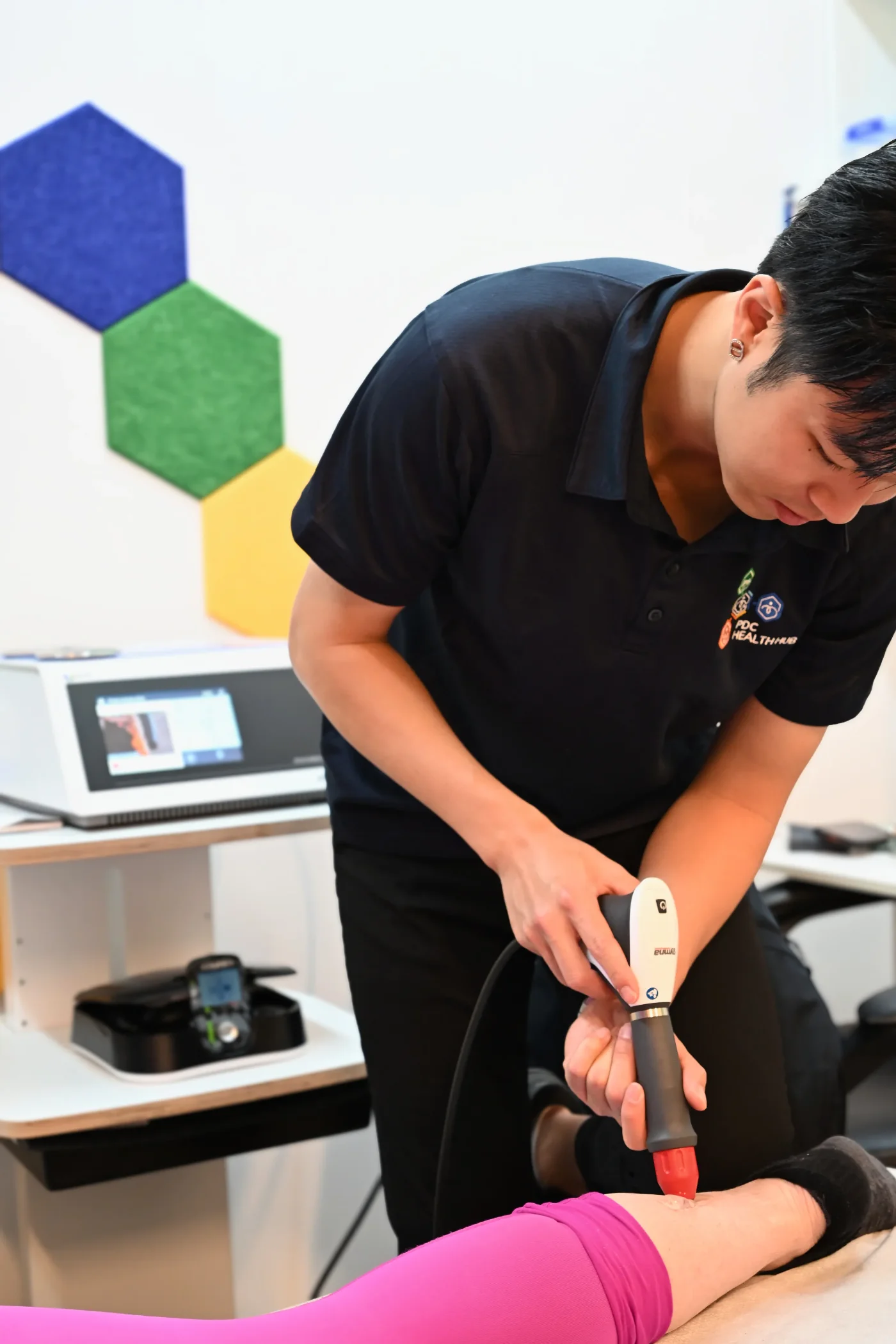
PHOTO NEEDED · Add a Hero Image to this condition in the CMS: a PDC clinician with a client, natural light, no identifiable health information on screen
Symptoms are a guide, not a diagnosis. Your GP confirms the diagnosis; our team helps you manage it day to day.
The teams and services that most often support people with this condition. They work from one shared plan, and one GP referral reaches all of them.


This page follows Australian guidance: healthdirect Australia on trigger finger, Dupuytren's contracture, carpal tunnel syndrome and cellulitis, Queensland Health's Clinical Prioritisation Criteria for stenosing tenosynovitis, and Diabetes Australia on the hand complications of diabetes.
Not on its own, but the link is real. Trigger finger, Dupuytren's contracture, stiff hand syndrome and carpal tunnel syndrome are all seen more often in people living with diabetes. Queensland Health's referral criteria go further and treat diabetes as something that can directly contribute to trigger finger, and they expect it to be stable and controlled before a referral is sent. The practical upshot is that hand symptoms are worth raising at your diabetes reviews.
Trigger finger is a tendon problem. The finger catches or locks as it moves through a narrowed tunnel, and it can usually still be straightened, sometimes with a snap. Dupuytren's contracture is a problem in the fibrous layer of the palm, where nodules and cords slowly bend the finger in and it cannot be straightened out. They feel different and they are treated differently, although some people have both.
It will not reverse it. Diabetes Australia is direct about stiff hand syndrome: once the damage is there, there is no known way to reverse the effects. Hand therapy is about keeping the movement you still have, protecting grip and finding ways to do the tasks that matter to you. That is a reason to start early rather than wait and see.
Probably not. Pain, burning, numbness or pins and needles in the palm, thumb and the two fingers next to it, often worse at night, points more towards carpal tunnel syndrome, which we cover on a separate page. Your GP can tell these conditions apart and treats them differently. Tell your GP straight away if you have weakness, changes in sensation, or pain that keeps getting worse.
That is your GP's or hand surgeon's call, not a physiotherapist's. For trigger finger, a steroid injection into the tendon sheath is the usual next step when symptoms do not settle, and healthdirect notes that if one or two injections do not help, surgery may be considered. For Dupuytren's contracture, options include corticosteroid or collagenase injections, needle aponeurotomy and surgery to remove thickened tissue. PDC physiotherapists work alongside whichever path you take.
Tell us what is going on and we will point you to the right discipline, or to more than one. Most people start with a single appointment and leave with a plan the rest of the team can see.
Or go straight to a service
Phone (08) 6110 0570 · Medicare, NDIS, DVA and private options across our services
For GPs and health professionals
Send an online referral in under two minutes. One referral reaches every discipline at PDC Health Hub.