Follow us

Search
For health professionalsContact usPress Enter to search. For products, try the shop filter.
 (08) 6110 0570
 admin@pdchealthhub.com.au
Press Enter to search. For products, try the shop filter.
(08) 6110 0570admin@pdchealthhub.com.auShoulder pain is often rotator cuff related, and exercise-led physiotherapy is the first-line treatment. We find the cause and build a strengthening plan around your goals.
Shoulder pain has several possible causes, including rotator cuff problems (rotator cuff related shoulder pain or rotator cuff tendinopathy), frozen shoulder, bursitis, arthritis and pain coming from the neck or spine.1 The rotator cuff is a group of four muscles and tendons that steady the shoulder and let it move, and injuries range from minor strains to complete tears that can come on suddenly or build up over time.2 This can make lifting, reaching overhead or sleeping on that side painful. Treatment depends on the cause, so a careful assessment matters.
Physiotherapy is the first-line approach for rotator cuff problems, using stretching and strengthening exercises.2 A 2025 JOSPT clinical practice guideline covers diagnosis, non-surgical care and rehabilitation of rotator cuff tendinopathy, including partial-thickness tears.3 The French national health authority (HAS) similarly recommends structured physiotherapy with progressive strengthening, and does not support surgery unless there is a full-thickness tear and conservative care has failed.4 Australian guidance is limited, so this care draws on international guidelines.
PHOTO NEEDED · Add a Hero Image to this condition in the CMS: a PDC clinician with a client, natural light, no identifiable health information on screen
Symptoms are a guide, not a diagnosis. Your GP confirms the diagnosis; our team helps you manage it day to day.
The teams and services that most often support people with this condition. They work from one shared plan, and one GP referral reaches all of them.
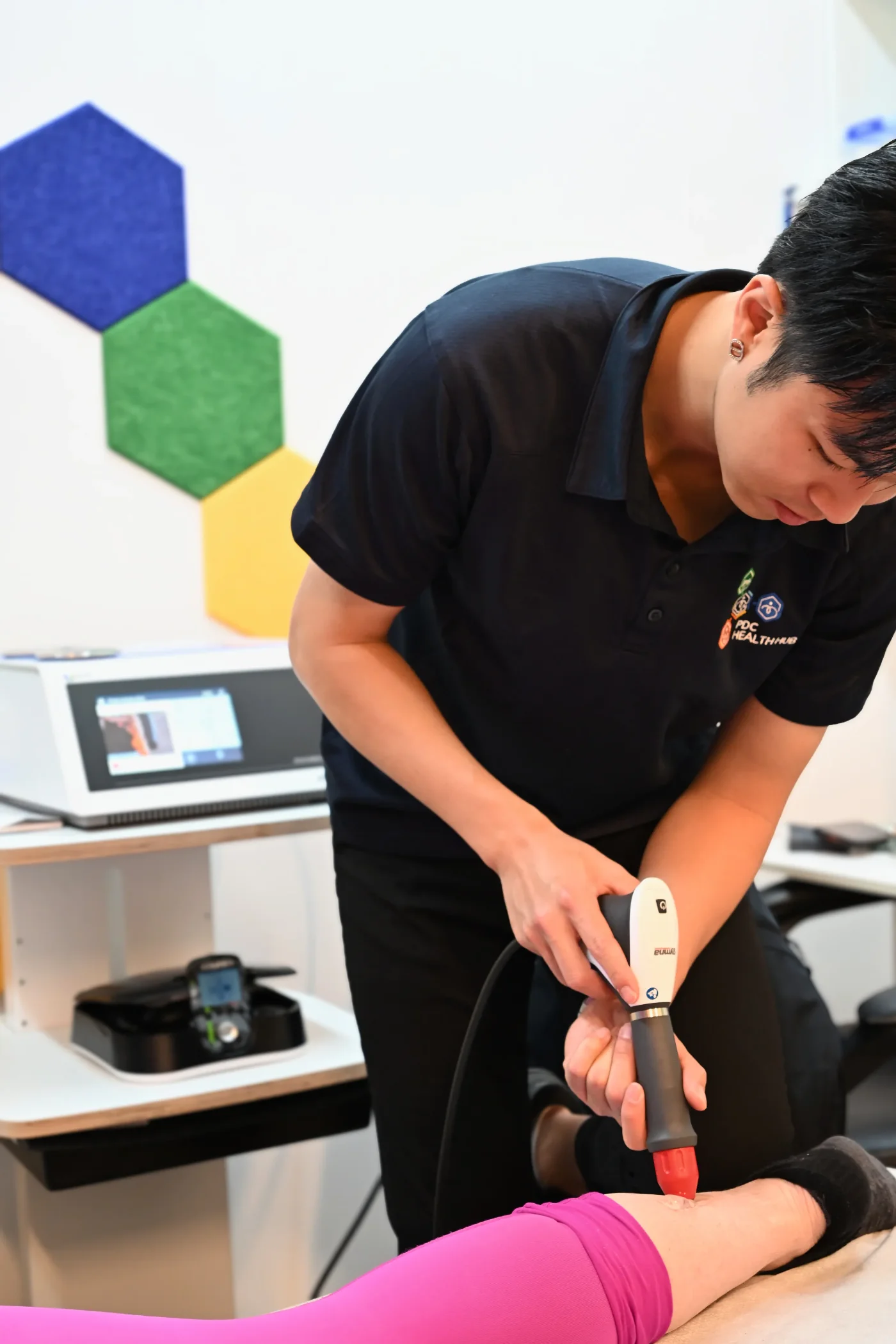
Our shoulder pain care follows the 2025 JOSPT rotator cuff tendinopathy clinical practice guideline and current Australian physiotherapy guidance.
It is pain from the rotator cuff muscles and tendons that steady and move your shoulder. It can follow a strain or build up over time.<sup>2</sup> It often responds to a progressive exercise program, and your physio will check other causes too.
Usually not at the start. Healthdirect lists surgery for when conservative treatment fails,<sup>2</sup> and the French HAS does not support surgery without a full-thickness tear and failed non-surgical care.<sup>4</sup> We guide your exercise program and liaise with your GP if referral is needed.
They can ease pain for a time and are a second-line option when exercise and other measures have not helped.<sup>4</sup> They are not a replacement for exercise. HAS found no demonstrated benefit from hyaluronic acid or platelet-rich plasma injections.<sup>4</sup> Discuss options with your GP.
It depends on the cause, how long you have had it and how consistently you can follow your program. Tendon problems tend to respond gradually to progressive strengthening rather than overnight. We review your progress and adjust the plan as you improve.
No referral is needed for private appointments. With a GP Chronic Condition Management Plan, Medicare rebates apply to up to five eligible allied health services a calendar year. Shoulder injuries from work may be covered by workers compensation, and private health extras or DVA may also apply.
Tell us what is going on and we will point you to the right discipline, or to more than one. Most people start with a single appointment and leave with a plan the rest of the team can see.
Or go straight to a service
Phone (08) 6110 0570 · Medicare, NDIS, DVA and private options across our services
For GPs and health professionals
Send an online referral in under two minutes. One referral reaches every discipline at PDC Health Hub.