Follow us

Search
For health professionalsContact usPress Enter to search. For products, try the shop filter.
 (08) 6110 0570
 admin@pdchealthhub.com.au
Press Enter to search. For products, try the shop filter.
(08) 6110 0570admin@pdchealthhub.com.auMODY is diabetes caused by a change in a single gene, inherited through a family. It often appears in two or more generations, and a genetic test is what confirms it.
MODY, or maturity onset diabetes of the young, is diabetes caused by a change in one single gene. Doctors also call this monogenic diabetes. It is not caused by body weight or lifestyle.2 The gene change is dominantly inherited, so a parent who carries it has a one in two chance of passing it to each child, which is why diabetes often runs through two or more generations of the same family.1 It usually appears before the age of 25.2 MODY is uncommon: Australian research puts monogenic diabetes at about one in 280 people with diagnosed diabetes.5
MODY is usually labelled as type 1 or type 2 diabetes first, and most people are misdiagnosed to begin with.1 The clues that something else is going on are a diagnosis under about 35 years of age, none of the usual features of insulin resistance, islet autoantibody tests that come back negative, insulin that is still being made years after diagnosis, and a strong family history of diabetes.3,4 Sorting out the label matters, because it can change the treatment, and it tells the rest of the family that testing is worth discussing.1
MODY is confirmed by a genetic test. In Australia, people with suspected MODY are referred to an endocrinologist to be assessed and for testing to be considered, usually alongside blood tests for islet autoantibodies and C-peptide.1,3 Treatment then follows the gene. Glucokinase MODY generally needs no treatment at all. HNF1A and HNF4A MODY respond to small doses of a sulfonylurea tablet, often better than to insulin. HNF1B MODY usually needs insulin and can also affect the kidneys.1,4
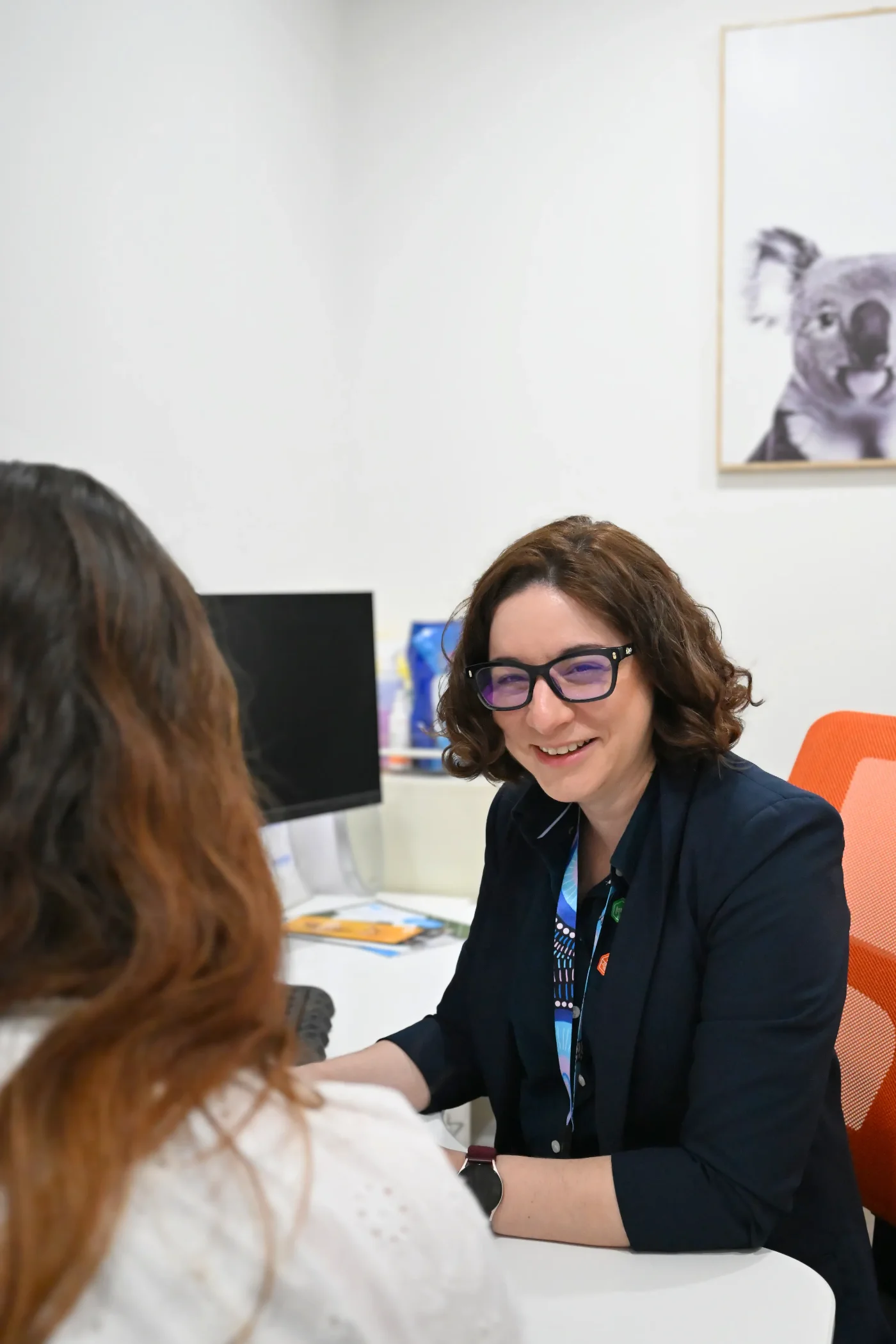
PHOTO NEEDED · Add a Hero Image to this condition in the CMS: a PDC clinician with a client, natural light, no identifiable health information on screen

Symptoms are a guide, not a diagnosis. Your GP confirms the diagnosis; our team helps you manage it day to day.
The teams and services that most often support people with this condition. They work from one shared plan, and one GP referral reaches all of them.



This page follows Australian guidance from the RACGP Genomics in general practice resource and Diabetes WA, with international guidance from Diabetes UK and the International Society for Pediatric and Adolescent Diabetes used for the gene by gene treatment detail, because Australian consumer information on monogenic diabetes is limited.
No. MODY is a separate form of diabetes caused by a change in a single gene, and it behaves differently from both type 1 and type 2 diabetes. Most people are given a type 1 or type 2 label first, because MODY is uncommon and the early picture can look similar. The difference matters because the right treatment depends on which gene is involved.
Start with your GP. If the picture fits, the usual next step in Australia is a referral to an endocrinologist, who assesses you and arranges genetic testing if it is warranted. Blood tests for islet autoantibodies and C-peptide are often done first, because they help work out whether type 1 diabetes has been ruled out. PDC clinicians do not order genetic tests or diagnose, but we can help you gather the glucose information and family history your doctor will want.
MODY is dominantly inherited, so each child of a parent who carries the gene change has a one in two chance of inheriting it. That is a reason to talk with your doctor about whether relatives should be offered testing. Once the gene change is known in one family member, testing other family members is more straightforward.
It depends on the gene. HNF1A and HNF4A MODY usually respond well to small doses of a sulfonylurea tablet, and people are sometimes able to come off insulin they never needed. Glucokinase MODY generally needs no treatment, while HNF1B MODY usually does need insulin. Any change to your medicines is decided by your GP or specialist, not by us.
Yes, for most subtypes. Diabetes UK notes that all forms of MODY except glucokinase MODY carry a risk of the long term complications of diabetes, so eye, kidney, foot and cardiovascular checks still matter. Glucokinase MODY is the exception, with mild and stable glucose levels and complications not usually seen. Your GP or specialist will set the schedule for your checks.
Tell us what is going on and we will point you to the right discipline, or to more than one. Most people start with a single appointment and leave with a plan the rest of the team can see.
Or go straight to a service
Phone (08) 6110 0570 · Medicare, NDIS, DVA and private options across our services
For GPs and health professionals
Send an online referral in under two minutes. One referral reaches every discipline at PDC Health Hub.