Follow us

Search
For health professionalsContact usPress Enter to search. For products, try the shop filter.
 (08) 6110 0570
 admin@pdchealthhub.com.au
Press Enter to search. For products, try the shop filter.
(08) 6110 0570admin@pdchealthhub.com.auPhysio after a hip replacement helps you strengthen the new joint and return to walking, stairs and daily tasks safely. We support you before and after surgery in Perth.
A hip replacement (total hip arthroplasty) replaces the worn ball and socket of the hip joint, usually to relieve pain and stiffness from arthritis. Most people go home within a few days, are back to light daily activities by about six weeks, return to normal routines around three months, and keep gaining for up to 12 months.1 Your surgeon will explain which movements to avoid early on to protect the joint from dislocation.1 Registry data show 10-year revision rates of about 2.5% to 8.0%, depending on the group.2
Rehabilitation, including physiotherapy and occupational therapy, helps you strengthen the new joint and improve flexibility.1 WA public hospitals offer joint replacement nurse contact and education before surgery, and say active participation before and after surgery improves recovery.5 Exercise before hip replacement (prehabilitation) is common, but the evidence is weaker than for knees: one 2023 review found insufficient evidence for hip outcomes, and another found minimal gains before or after surgery.3,4 It supports recovery but is not a guarantee.
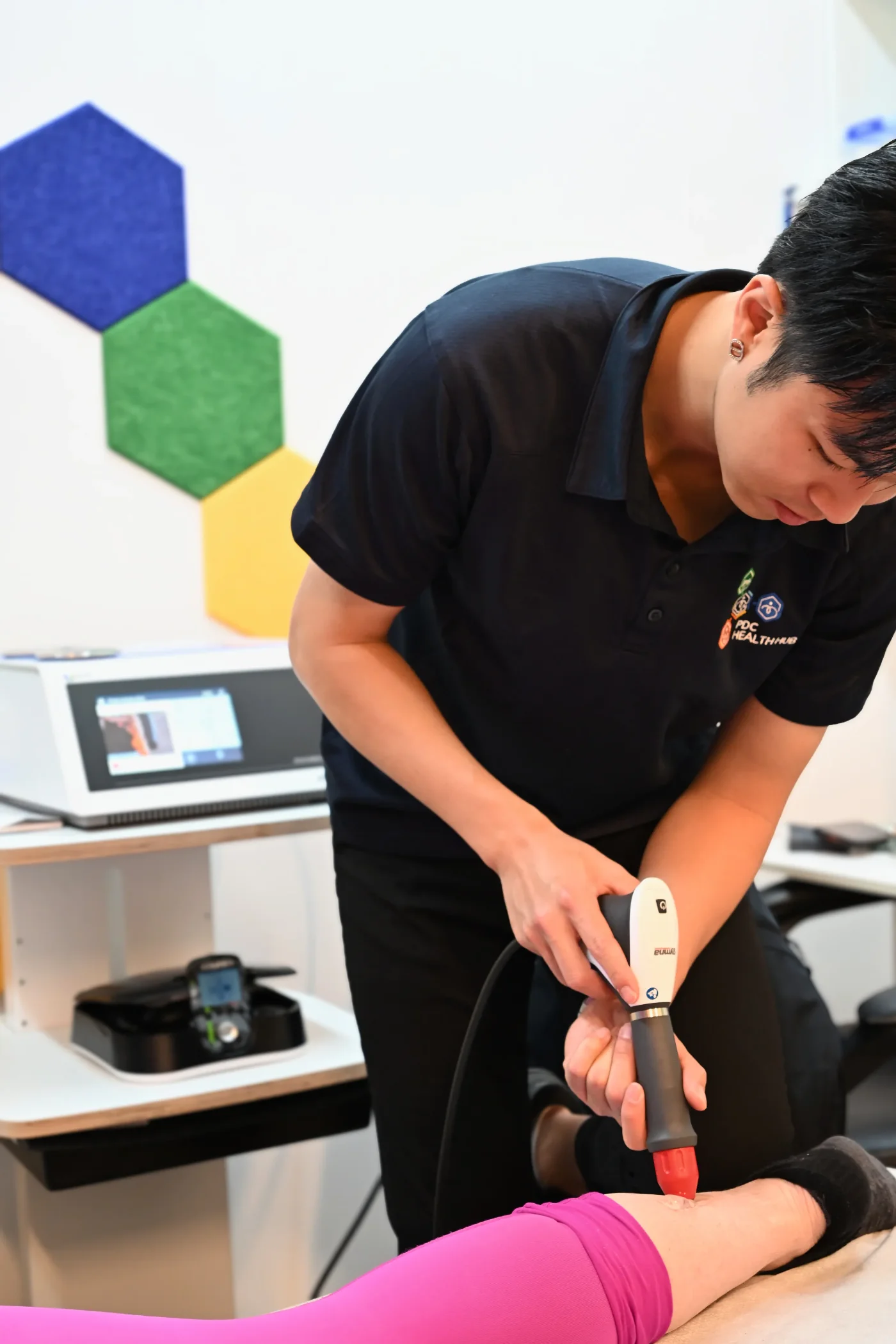
PHOTO NEEDED · Add a Hero Image to this condition in the CMS: a PDC clinician with a client, natural light, no identifiable health information on screen
Symptoms are a guide, not a diagnosis. Your GP confirms the diagnosis; our team helps you manage it day to day.
The teams and services that most often support people with this condition. They work from one shared plan, and one GP referral reaches all of them.
Our care follows Healthdirect and WA Health joint replacement guidance, current physiotherapy evidence, and your surgeon's rehabilitation protocol.
Most people manage light daily activities by about six weeks and are back to normal routines around three months. Further gains can continue for up to 12 months.<sup>1</sup> The pace varies from person to person, so follow your surgeon's advice.
It depends on the surgical approach and your surgeon, who will explain how to care for the new hip and prevent dislocation, especially in the first months.<sup>1</sup> Follow those instructions closely. We build your exercises and daily routines around them.
It may help you feel prepared, but the evidence is weaker than for knees. One review found insufficient evidence for hip outcomes and another found minimal gains before or after surgery.<sup>3,4</sup> Active participation in your care is still encouraged.<sup>5</sup>
Your surgeon will advise which activities to avoid, and most people are advised to avoid high-impact sports.<sup>1</sup> Once the wound has healed and your surgeon agrees, hydrotherapy and other low-impact exercise are common choices. We help you build up gradually.
No referral is needed for private appointments. With a GP Chronic Condition Management Plan, Medicare rebates apply to up to five eligible allied health services a calendar year. Private health extras may also contribute, and workers compensation or DVA may apply in some cases.
Tell us what is going on and we will point you to the right discipline, or to more than one. Most people start with a single appointment and leave with a plan the rest of the team can see.
Or go straight to a service
Phone (08) 6110 0570 · Medicare, NDIS, DVA and private options across our services
For GPs and health professionals
Send an online referral in under two minutes. One referral reaches every discipline at PDC Health Hub.