Follow us

Search
For health professionalsContact usPress Enter to search. For products, try the shop filter.
 (08) 6110 0570
 admin@pdchealthhub.com.au
Press Enter to search. For products, try the shop filter.
(08) 6110 0570admin@pdchealthhub.com.auACL rehab often runs nine months or more, and return to sport should depend on strength and movement tests, not the calendar. We guide you from surgery to sport in Perth.
The anterior cruciate ligament (ACL) is a ligament inside the knee that keeps it stable when you pivot, land and change direction. An ACL reconstruction replaces a torn ligament with a graft, and can make a return to sport possible that might not otherwise be. Most people recover well, but it takes hard work, recovery can take months to years, and the knee may not be as good as before the injury.1 Some people do well with rehabilitation alone, so surgery is a shared decision.5
Rehabilitation is guided by criteria, not the calendar. The Aspetar guideline says its length is individual and depends on showing you can safely meet your activity demands.2 Pivoting sport is usually delayed until at least nine months, and hop distance alone is not enough.4 In one cohort of 100 people, each month of delay up to nine months cut reinjury by 51%, and fewer people who passed all tests were reinjured.3 That was observational, so treat it as guidance, not a guarantee.
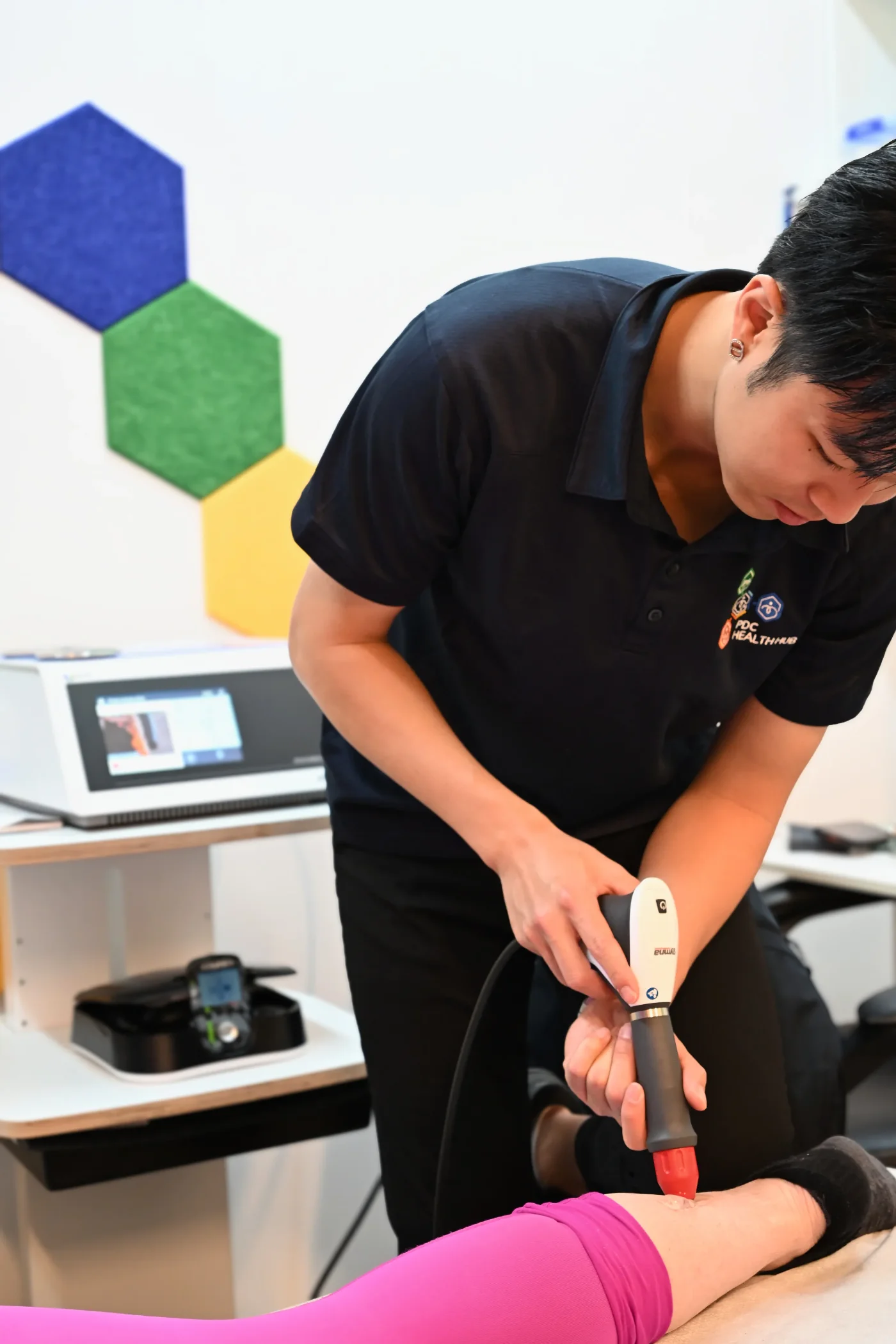
PHOTO NEEDED · Add a Hero Image to this condition in the CMS: a PDC clinician with a client, natural light, no identifiable health information on screen

Symptoms are a guide, not a diagnosis. Your GP confirms the diagnosis; our team helps you manage it day to day.
The teams and services that most often support people with this condition. They work from one shared plan, and one GP referral reaches all of them.
Our care follows the 2023 Aspetar clinical practice guideline on rehabilitation after ACL reconstruction and your surgeon's rehabilitation protocol.
Guidance suggests waiting at least nine months before returning to pivoting sport, and many people need longer. The timing is individual and depends on meeting strength, movement and confidence criteria.<sup>2,4</sup> Returning earlier is linked with more reinjury.<sup>3</sup>
Tests show whether your leg is strong and controlled enough for the demands of sport, which time alone cannot do. In one study, fewer people who passed all tests were reinjured, though the overall evidence on test batteries is mixed.<sup>2,3</sup>
Not always. Research suggests some people do as well with rehabilitation alone as with early surgery, and the choice depends on your knee, your sport and your goals.<sup>5</sup> We can explain your options and liaise with your GP or surgeon.
The Aspetar guideline says rehabilitation before surgery might improve thigh strength and knee movement afterwards, and may shorten the time to return to sport, although evidence is limited.<sup>2</sup> Getting swelling down and full straightening back is a common aim.
No referral is needed for private appointments. With a GP Chronic Condition Management Plan, Medicare rebates apply to up to five eligible allied health services a calendar year. Private health extras may also contribute, and workers compensation or DVA may apply in some cases.
Tell us what is going on and we will point you to the right discipline, or to more than one. Most people start with a single appointment and leave with a plan the rest of the team can see.
Or go straight to a service
Phone (08) 6110 0570 · Medicare, NDIS, DVA and private options across our services
For GPs and health professionals
Send an online referral in under two minutes. One referral reaches every discipline at PDC Health Hub.
