Follow us

Search
For health professionalsContact usPress Enter to search. For products, try the shop filter.
 (08) 6110 0570
 admin@pdchealthhub.com.au
Press Enter to search. For products, try the shop filter.
(08) 6110 0570admin@pdchealthhub.com.auExercise-led physio is central after meniscus surgery, and for degenerative tears trials show it works about as well as surgery. We guide you before and after in Perth.
The menisci are two C-shaped pads of cartilage that cushion and steady the knee. They can tear in a twisting injury, often in younger people, or wear and fray gradually with age (a degenerative tear). Surgery is either a repair (stitching the tear) or a partial meniscectomy (trimming the damaged part), usually done as keyhole surgery (arthroscopy).4 People often go home the same day, and swelling for a few weeks is common.4,5
Exercise-led rehabilitation is central after both. For degenerative tears, a trial of 140 middle-aged adults found no clinically relevant difference in knee function at two years between supervised exercise and partial meniscectomy, and the exercise group had stronger thigh muscles.1 A 2023 review of five-year results found no added benefit to knee function from surgery on top of exercise, although sport and recreation scores initially favoured surgery plus exercise before a sensitivity analysis removed the difference.2 A US guideline recommends supervised exercise after meniscectomy.3 Repair rehabilitation is slower and more protected, and follows your surgeon's protocol.6
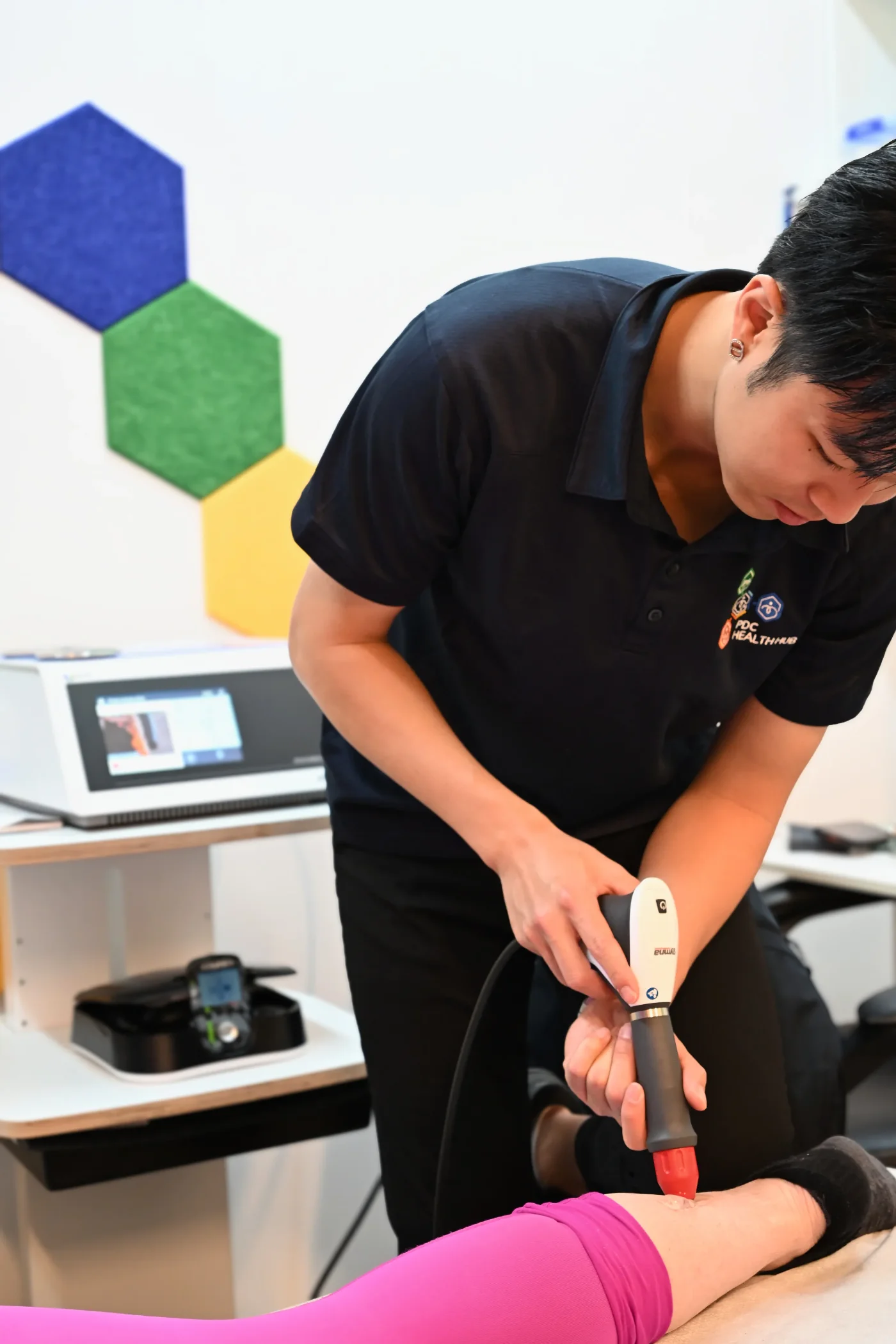
PHOTO NEEDED · Add a Hero Image to this condition in the CMS: a PDC clinician with a client, natural light, no identifiable health information on screen
Symptoms are a guide, not a diagnosis. Your GP confirms the diagnosis; our team helps you manage it day to day.
The teams and services that most often support people with this condition. They work from one shared plan, and one GP referral reaches all of them.
Our care follows the JOSPT knee meniscal and articular cartilage lesions guideline, current trial evidence, Healthdirect and WA Health guidance, and your surgeon's rehabilitation protocol.
Not always. For degenerative tears, physiotherapy and medicines can sometimes prevent or delay the need for arthroscopy.<sup>5</sup> A knee that locks and will not unlock needs urgent assessment, because a displaced piece may need arthroscopy.<sup>4</sup> Your GP or surgeon helps decide.
In trials of mostly middle-aged adults, supervised exercise and keyhole surgery gave similar knee function at two years, with better thigh strength after exercise.<sup>1</sup> At five years, a review found no added benefit from surgery, although sport and recreation scores initially favoured it.<sup>2</sup> This does not apply to every tear.
Most people go home the same day, swelling lasts a few weeks, and supervised exercise is recommended to restore movement and strength.<sup>3,4,5</sup> The pace depends on your knee, work and sport, and your surgeon's advice. We tailor the plan to you.
Repairs are protected for longer. One published protocol limits weight bearing and bending for several weeks, with return to competitive sport around four to six months for stable tears and longer for unstable tears.<sup>6</sup> Your surgeon's protocol takes priority.
No referral is needed for private appointments. With a GP Chronic Condition Management Plan, Medicare rebates apply to up to five eligible allied health services a calendar year. Private health extras may also contribute, and workers compensation or DVA may apply in some cases.
Tell us what is going on and we will point you to the right discipline, or to more than one. Most people start with a single appointment and leave with a plan the rest of the team can see.
Or go straight to a service
Phone (08) 6110 0570 · Medicare, NDIS, DVA and private options across our services
For GPs and health professionals
Send an online referral in under two minutes. One referral reaches every discipline at PDC Health Hub.
