Follow us

Search
For health professionalsContact usPress Enter to search. For products, try the shop filter.
 (08) 6110 0570
 admin@pdchealthhub.com.au
Press Enter to search. For products, try the shop filter.
(08) 6110 0570admin@pdchealthhub.com.auA thyroid condition means the gland at the base of your neck is making too little thyroid hormone (hypothyroidism) or too much (hyperthyroidism), which changes the pace your whole body runs at.
Your thyroid is a small gland at the base of your neck, in front of the throat. It makes hormones that set the pace of your metabolism, including your heart rate, blood pressure, body temperature and weight.1 It can go wrong in two directions. An underactive thyroid (hypothyroidism) makes too little hormone, so things slow down: tiredness, feeling the cold, constipation, weight gain, dry skin and low mood.2 An overactive thyroid (hyperthyroidism, also called thyrotoxicosis) makes too much, so things speed up: palpitations, sweating, tremor, weight loss and trouble sleeping.3,6
The most common cause of an underactive thyroid in Australia is Hashimoto's disease, where the immune system attacks the thyroid.2 Autoimmune conditions tend to travel together, so type 1 diabetes, coeliac disease and hypothyroidism turn up in the same person often enough that having one may raise the chance of another.7 Symptoms are also easy to put down to something else, which is part of why an underactive thyroid can be hard to pick up early.5 A blood test settles it. Your GP orders thyroid function tests, starts treatment, adjusts the dose against those results and refers you to an endocrinologist when the picture calls for it.2,3
PDC clinicians do not diagnose thyroid conditions and do not change doses. Our pharmacists help with the day to day of taking it. Thyroxine is absorbed poorly if it has company. It is usually taken as soon as you wake, at least 30 to 60 minutes before breakfast.4 Other medicines and supplements, including vitamins and minerals, change how well it works, so they belong at a different time of day.4 Brands are not always interchangeable, so tell your pharmacist which one you use.4 A dose can take four to six weeks to show its full effect.4
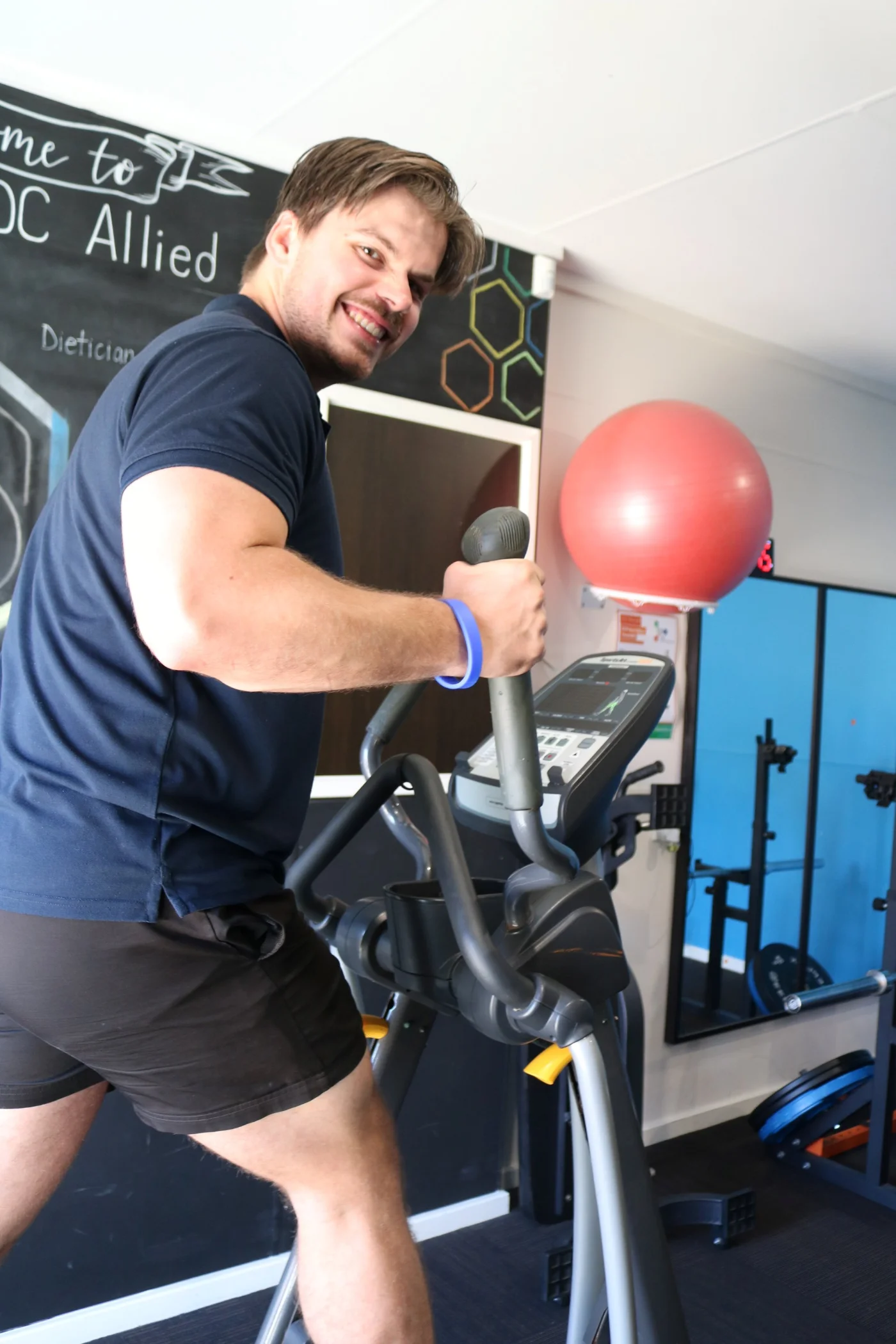
PHOTO NEEDED · Add a Hero Image to this condition in the CMS: a PDC clinician with a client, natural light, no identifiable health information on screen

Symptoms are a guide, not a diagnosis. Your GP confirms the diagnosis; our team helps you manage it day to day.
The teams and services that most often support people with this condition. They work from one shared plan, and one GP referral reaches all of them.



This page follows current Australian guidance: Healthdirect Australia's thyroid and thyroid medicines information, and Hormones Australia from the Endocrine Society of Australia on hypothyroidism and hyperthyroidism. Diagnosis, prescribing and all dose changes sit with your GP or endocrinologist.
Once a day, on an empty stomach, as soon as you wake and at least 30 to 60 minutes before breakfast. Most people find first thing on waking, with water only, is the easiest way to make that happen. Pick a time you can repeat every day, because a routine you can keep is easier than one you have to remember. If mornings genuinely do not work for you, ask your pharmacist or GP what else is possible.
Not at the same time. healthdirect's advice is to avoid taking other medicines, including supplements, at the same time as levothyroxine, because some medicines, vitamins and minerals change how well thyroid medicines work. Take them at a different time of day instead. A pharmacist can lay your day out so everything still gets taken, just not together.
Only your prescriber changes it, and the decision is guided by a blood test rather than by how you feel on the day. It can take four to six weeks for a dose to show its full effect, and finding the right dose often takes a few rounds. Once your dose is settled, a yearly check is usual. If symptoms persist on treatment, your GP may refer you to an endocrinologist.
Autoimmune conditions tend to travel together. Diabetes Australia notes that type 1 diabetes, coeliac disease, hypothyroidism and Addison's disease are all autoimmune, and that being diagnosed with one may increase the chance of developing another. Ask your GP whether thyroid blood tests belong in your regular reviews. Our Credentialled Diabetes Educators can help you track symptoms and raise them, but testing and diagnosis are the GP's call.
It can. Not all brands of thyroxine can be swapped for each other, so your pharmacist needs to know which brand you are on and should keep you on it unless your prescriber says otherwise. Mention it every time you fill a script, including at a pharmacy you do not normally use. Some brands also need to be kept in the fridge, so check the storage instructions.
Tell us what is going on and we will point you to the right discipline, or to more than one. Most people start with a single appointment and leave with a plan the rest of the team can see.
Or go straight to a service
Phone (08) 6110 0570 · Medicare, NDIS, DVA and private options across our services
For GPs and health professionals
Send an online referral in under two minutes. One referral reaches every discipline at PDC Health Hub.