Follow us

Search
For health professionalsContact usPress Enter to search. For products, try the shop filter.
 (08) 6110 0570
 admin@pdchealthhub.com.au
Press Enter to search. For products, try the shop filter.
(08) 6110 0570admin@pdchealthhub.com.auOsteoarthritis is a long term condition in which a joint becomes painful and stiff, and exercise is first line care for it, not a last resort. The whole joint is involved, not only the cartilage.
Osteoarthritis (OA) is a long term condition in which a joint becomes painful and stiff and does not move as freely. The whole joint is involved, not just the cartilage, so bone, ligaments, tendons and the muscles around the joint all change.1 It most often affects the knees, hips, hands and fingers, spine and feet.1 Knee osteoarthritis alone affects around 1.2 million people in Australia.2 It is not the same as rheumatoid or psoriatic arthritis, which are autoimmune conditions.1
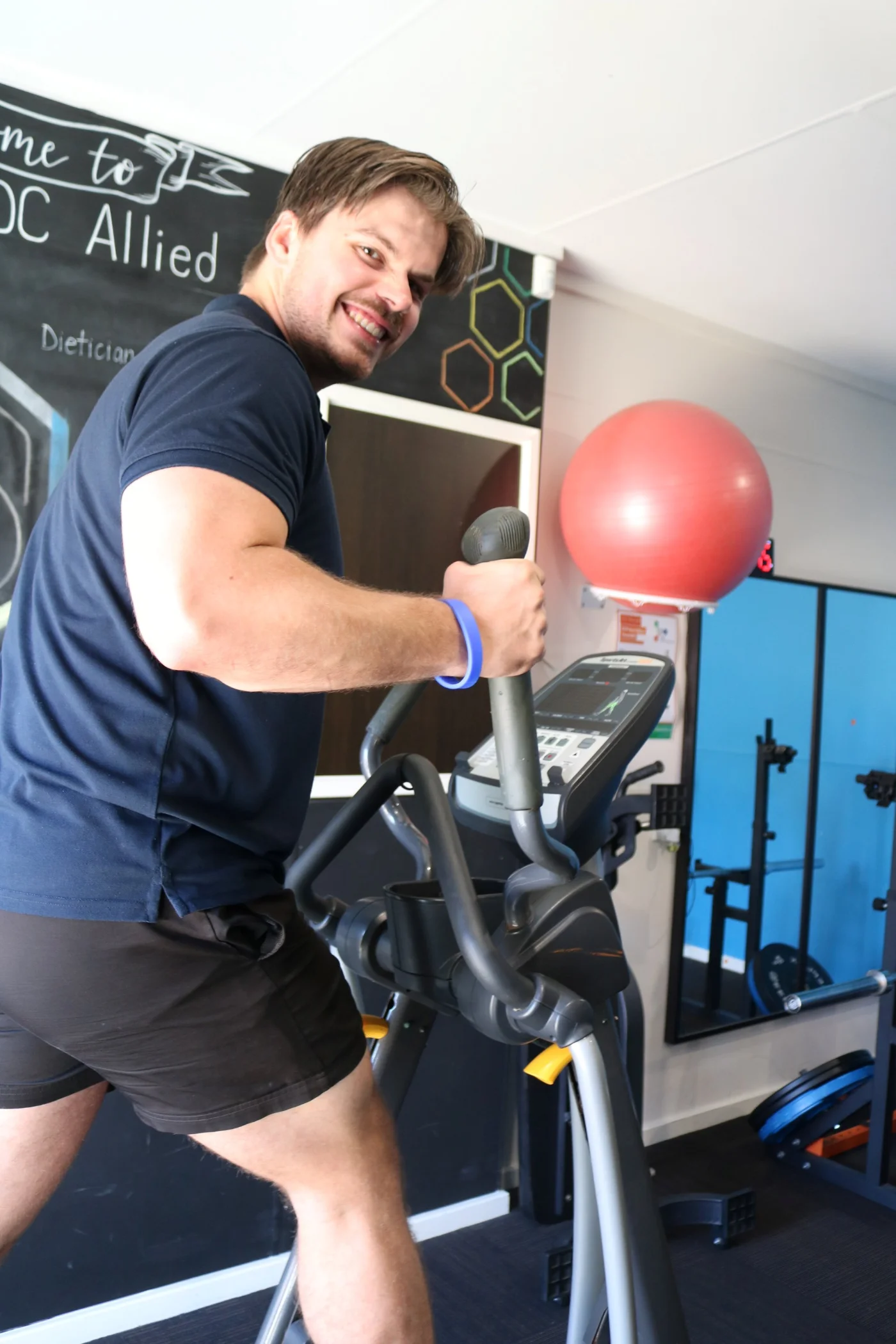
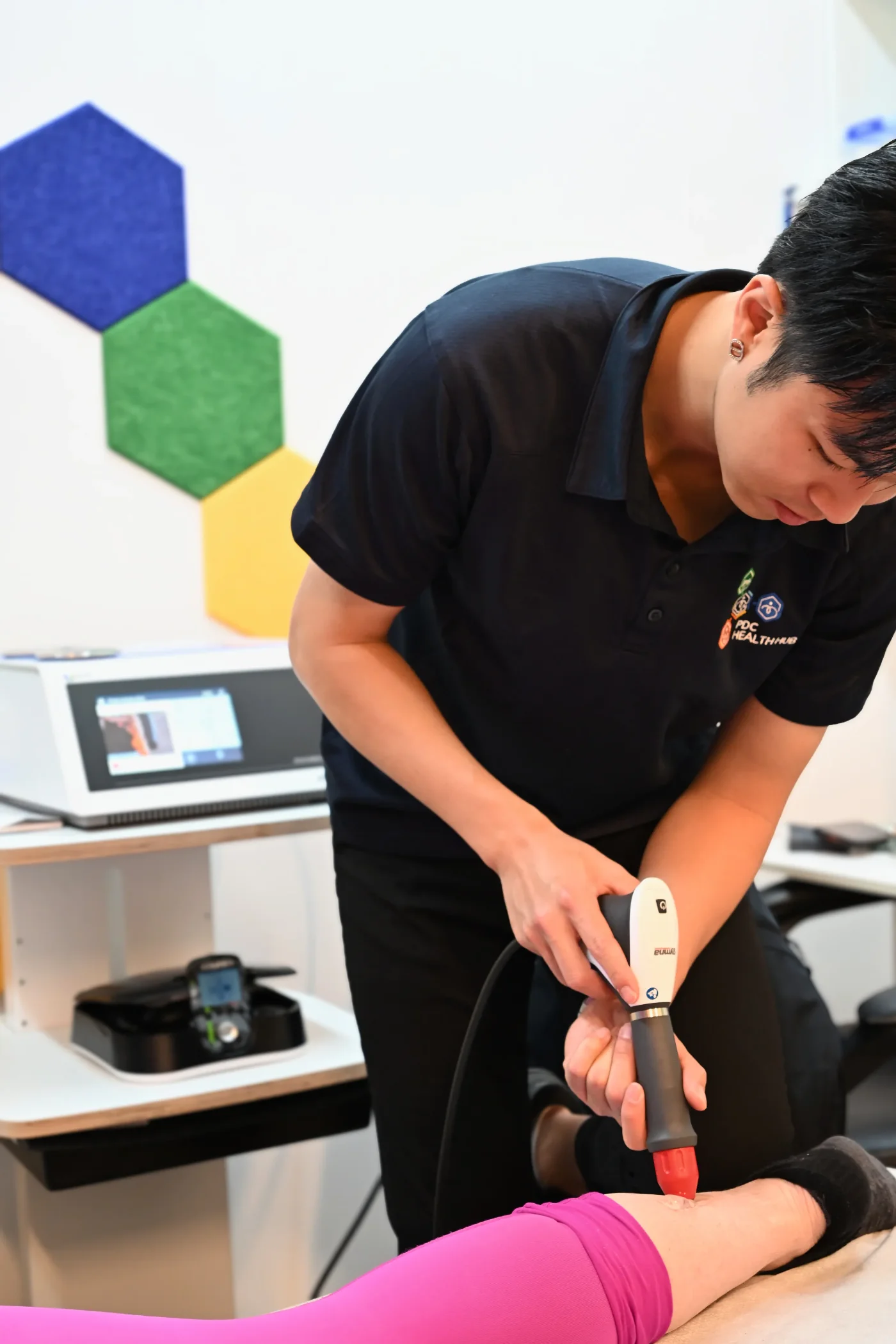
Exercise and physical activity are core treatment, not a last resort. Australian guidance strongly recommends land based exercise such as walking, muscle strengthening and Tai Chi for everyone with knee osteoarthritis, and an individualised program for hip osteoarthritis.3,4 Feeling some pain or discomfort while you exercise is normal and does not mean you are damaging the joint.5 Most people do not need an X-ray, MRI or CT scan to start treatment.5 At PDC an exercise physiologist or physiotherapist prescribes and progresses the program. Your GP manages pain medicines, and an orthopaedic surgeon decides about joint replacement.1,5
Load management means matching how much you ask of the joint to what it can handle today, then building that capacity over weeks. In practice it looks like steady doses rather than big swings: shorter, more frequent walks instead of one long one, and a planned increase only when the last step has settled. Guidance is to progress by frequency, duration and intensity rather than pushing through.4 Staying active and managing weight can delay or avoid surgery for many people.5 Knee arthroscopy is not recommended for osteoarthritis.5 A joint that suddenly becomes hot, swollen and very painful is a different problem, septic arthritis, and is an emergency.6
PHOTO NEEDED · Add a Hero Image to this condition in the CMS: a PDC clinician with a client, natural light, no identifiable health information on screen

Symptoms are a guide, not a diagnosis. Your GP confirms the diagnosis; our team helps you manage it day to day.
The teams and services that most often support people with this condition. They work from one shared plan, and one GP referral reaches all of them.

This page follows Australian guidance: the Australian Commission on Safety and Quality in Health Care Osteoarthritis of the Knee Clinical Care Standard (2024) and the RACGP Guideline for the management of knee and hip osteoarthritis (2018).
Yes. Australian guidance for knee osteoarthritis states that exercise is safe for your knee even if the osteoarthritis is severe. It also says that feeling some pain or discomfort while exercising is normal and does not mean you are damaging the joint. If pain stays high after a session, tell your exercise physiologist or physiotherapist so the dose can be adjusted rather than abandoned.
Usually not. Australian guidance says most people with knee osteoarthritis do not need X-rays, MRI or CT scans, and that scans will not help decide your initial treatment. Your GP can diagnose it from your history and an examination. If something in your presentation does need imaging, PDC physiotherapists can refer you directly.
That is a decision for an orthopaedic surgeon, made with you, and it is not the first step. Australian guidance notes that most people who are physically active and manage their weight can delay or avoid surgery. Knee arthroscopy is not recommended for knee osteoarthritis. PDC clinicians do not decide about surgery and do not refer for it.
It means matching what you ask of the joint to what it can handle now, then building that up in planned steps. Guidance is to progress a program by how often, how long and how hard you exercise, rather than by pushing through pain. In practice that often means several shorter sessions instead of one big effort, and holding a level until it settles before you add more.
It can. Australian guidance strongly recommends weight management alongside exercise for people living with knee osteoarthritis who are carrying excess weight, and expects losing weight to reduce knee pain. Our Accredited Practising Dietitians work on this with you. No diet cures osteoarthritis, so nutrition sits beside the exercise program rather than replacing it.
Tell us what is going on and we will point you to the right discipline, or to more than one. Most people start with a single appointment and leave with a plan the rest of the team can see.
Or go straight to a service
Phone (08) 6110 0570 · Medicare, NDIS, DVA and private options across our services
For GPs and health professionals
Send an online referral in under two minutes. One referral reaches every discipline at PDC Health Hub.
