Follow us

Search
For health professionalsContact usPress Enter to search. For products, try the shop filter.
 (08) 6110 0570
 admin@pdchealthhub.com.au
Press Enter to search. For products, try the shop filter.
(08) 6110 0570admin@pdchealthhub.com.auPhysiotherapy for people living with motor neurone disease aims for comfort, safe movement and independence, with equipment and energy conservation, alongside your MND clinic and GP.
Motor neurone disease (MND) is a progressive condition in which the nerve cells that control voluntary muscles gradually stop working, so muscles weaken over time. There is currently no cure. Care focuses on managing symptoms and complications, and how quickly things change varies a great deal between people.1 Care from a multidisciplinary team, including a specialist MND clinic in Perth, helps people live better and may help them live longer.2
Physiotherapy for people living with MND aims at comfort, safe movement and independence, not at strengthening muscles the disease has weakened.3 Exercise is supervised by someone who knows MND and kept within limits to avoid fatigue and soreness.3 A Cochrane review found too little evidence to say how much strengthening exercise helps, so we make no claim that exercise changes the course of the disease.4 We help with pacing and energy conservation5 and with timely equipment advice.6
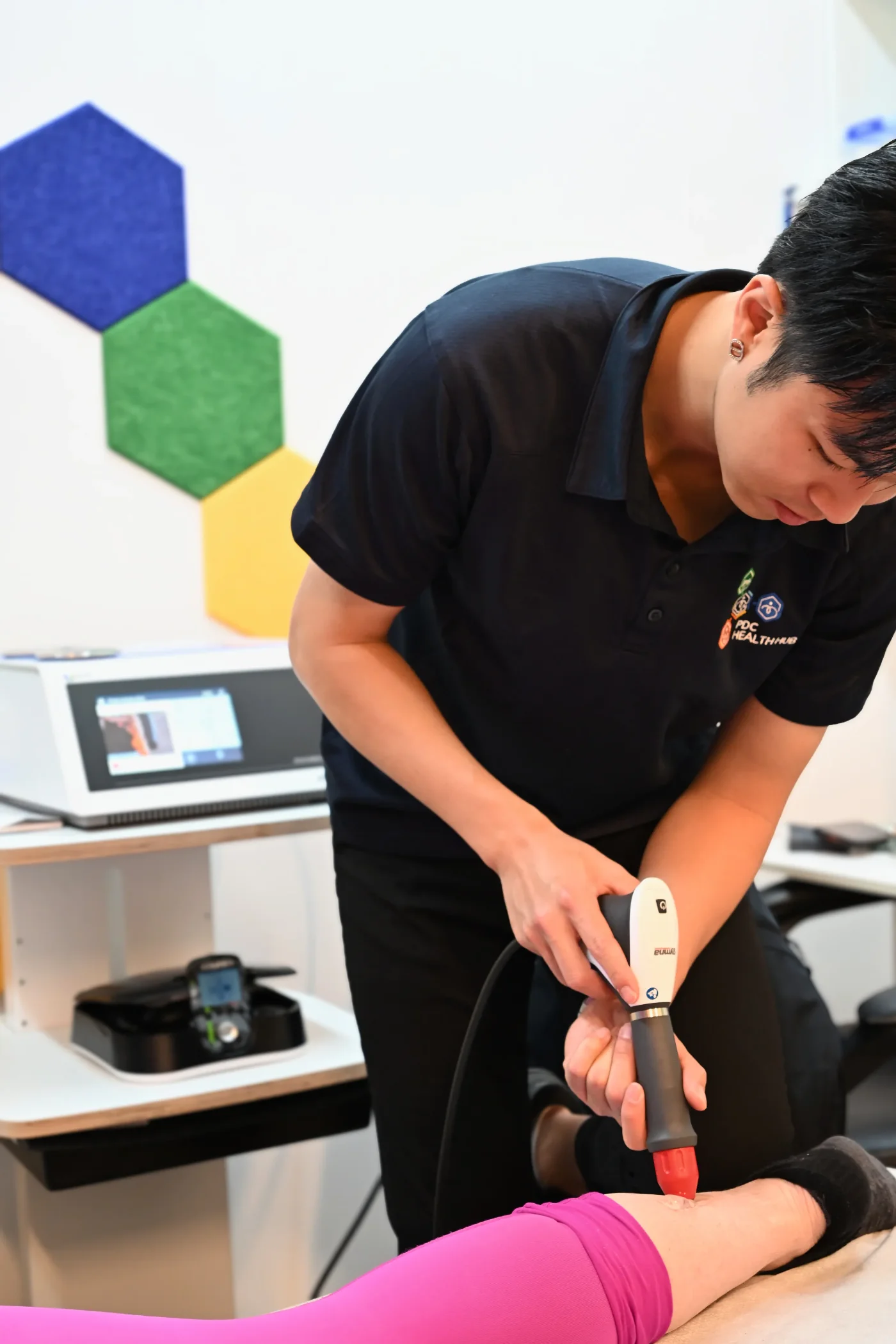
PHOTO NEEDED · Add a Hero Image to this condition in the CMS: a PDC clinician with a client, natural light, no identifiable health information on screen
Symptoms are a guide, not a diagnosis. Your GP confirms the diagnosis; our team helps you manage it day to day.
The teams and services that most often support people with this condition. They work from one shared plan, and one GP referral reaches all of them.
Our care follows MND Australia guidance, Healthdirect information and the Cochrane review of therapeutic exercise in motor neurone disease, adapted to each person's goals and stage.
No. Exercise does not cure MND, and we do not claim it changes the disease course. MND Australia says moderate, supervised exercise within your limits can support physical health and quality of life, but research is limited and it cannot strengthen weakened muscles.
We focus on comfort, safe movement and independence. That means gentle exercise within your limits, pacing, walking aid prescription, safe transfer and movement advice for you and your carers, and reports for your GP, MND clinic and NDIS. Goals are set with you.
Plan activities in advance, do harder tasks when you usually have more energy, avoid rushing and take regular breaks. Labour-saving devices help. Listen to your body and do not push through. We can build pacing into your daily routine and any exercise.
Multidisciplinary clinic care is recommended, and specialist MND clinics operate in Perth. We work alongside your clinic and GP, not instead of them, and can provide local ongoing physiotherapy and share reports with your team.
No referral is needed for private appointments. With a GP Chronic Condition Management Plan, Medicare rebates apply to up to five eligible allied health services a calendar year. NDIS, aged care funding or private health extras may also help, depending on eligibility.
Tell us what is going on and we will point you to the right discipline, or to more than one. Most people start with a single appointment and leave with a plan the rest of the team can see.
Or go straight to a service
Phone (08) 6110 0570 · Medicare, NDIS, DVA and private options across our services
For GPs and health professionals
Send an online referral in under two minutes. One referral reaches every discipline at PDC Health Hub.