Follow us

Search
For health professionalsContact usPress Enter to search. For products, try the shop filter.
 (08) 6110 0570
 admin@pdchealthhub.com.au
Press Enter to search. For products, try the shop filter.
(08) 6110 0570admin@pdchealthhub.com.auVertigo is dizziness where you or the room feels like it is spinning, and the most common cause is benign paroxysmal positional vertigo (BPPV), where crystals come loose in the inner ear.
Vertigo is a particular kind of dizziness: you feel like you are spinning or falling while you are still, or the room spins around you, often with nausea, vomiting, sweating or going pale.1 The most common cause is benign paroxysmal positional vertigo (BPPV), where calcium carbonate crystals come loose inside the inner ear and settle in one of the balance canals, so head movement sends the wrong signal to the brain.1,2 Attacks are short, seconds to a couple of minutes, set off by rolling over in bed, getting in or out of bed, or looking up.2,3 BPPV does not cause ringing in the ears or hearing loss.3
Other inner ear causes include vestibular neuritis, labyrinthitis and Meniere's disease, and dizziness can also come from low blood pressure, heart problems, migraine, low blood glucose, anaemia, dehydration or medicines.1,4 Working out which it is comes first, and that is your GP's job. For BPPV, a doctor or a physiotherapist familiar with the techniques performs repositioning manoeuvres such as the Epley manoeuvre, and may teach you exercises for home.2,3 A Cochrane review found the Epley manoeuvre is a low risk treatment for the common form of BPPV.6 Sudden dizziness with weakness, numbness, slurred speech or vision changes can be a stroke and needs an ambulance, not an appointment.5
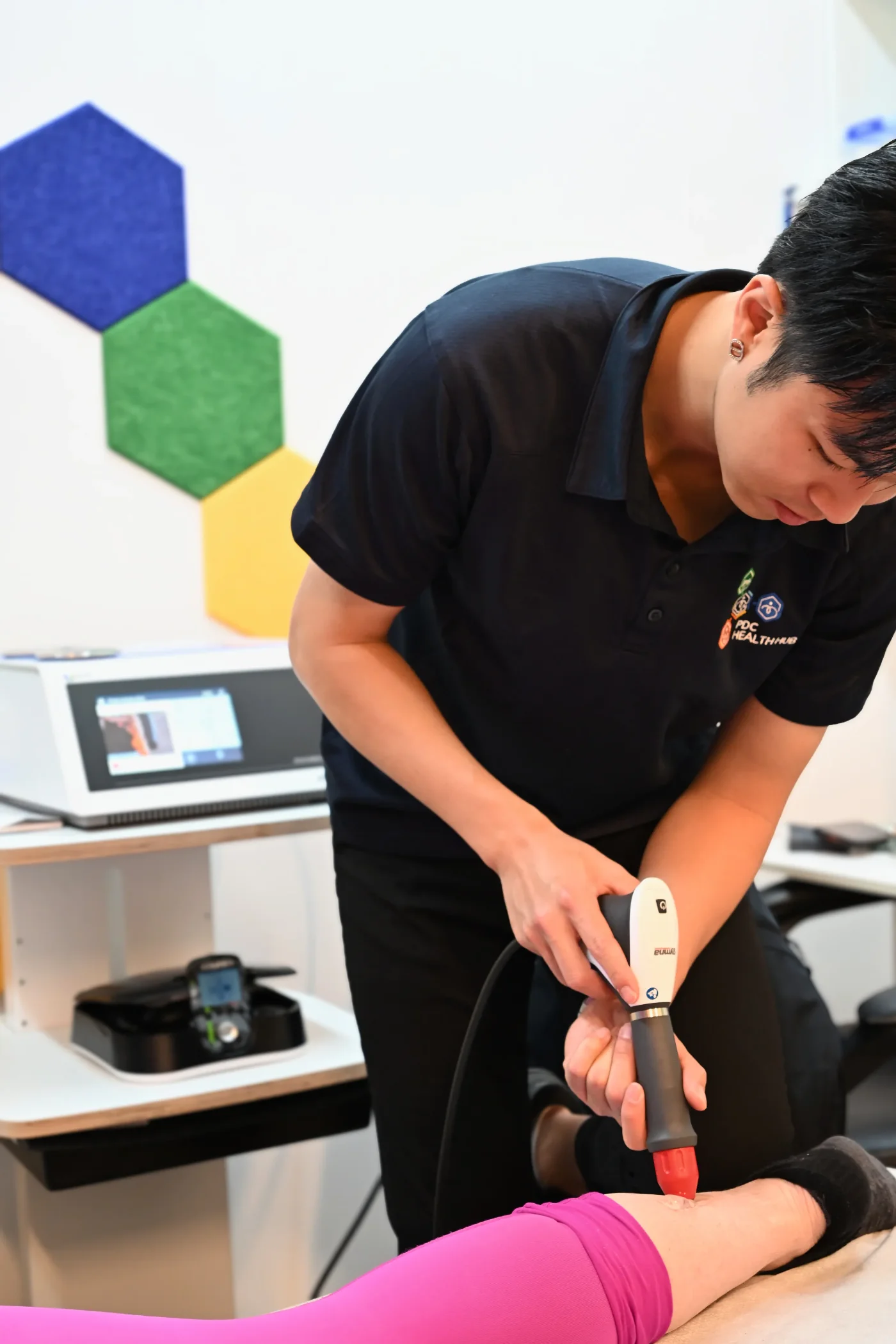
PHOTO NEEDED · Add a Hero Image to this condition in the CMS: a PDC clinician with a client, natural light, no identifiable health information on screen
Symptoms are a guide, not a diagnosis. Your GP confirms the diagnosis; our team helps you manage it day to day.
The teams and services that most often support people with this condition. They work from one shared plan, and one GP referral reaches all of them.

This page follows Australian guidance: healthdirect Australia on vertigo, dizziness and stroke, and the Victorian Better Health Channel and the NSW Emergency Care Institute on benign paroxysmal positional vertigo. The note on repositioning manoeuvres draws on a Cochrane review, which is international rather than Australian.
It is physiotherapy for the balance organs in the inner ear and the way your brain uses their signals. Assessment looks at your eye movements, how your head and eyes work together and how steady you are. Treatment uses repositioning manoeuvres where loose crystals are the problem, and graded balance and gaze exercises where the system needs to recalibrate. At PDC this work sits inside our physiotherapy service, which sees people aged 16 and over.
With repositioning manoeuvres, not medicine. A doctor or a physiotherapist trained in the techniques moves your head through a set sequence, such as the Epley manoeuvre or a barbecue roll, to move the crystals out of the canal they have fallen into. More than one session is sometimes needed, and mild dizziness can last up to a week afterwards. Short term anti nausea medicine is a separate question for your GP or pharmacist.
You cannot be sure on your own, which is why the rule is simple. Dizziness or vertigo with double vision or vision changes, slurred speech, trouble swallowing, weakness or numbness, confusion, a sudden severe headache or trouble walking means calling triple zero (000) for an ambulance straight away, even if it settles. Dizziness with chest pain or breathlessness is also a 000 call. See your GP first for an unexplained fall, or dizziness that is new, severe or keeps coming back.
Not while you are dizzy. NSW Health's Emergency Care Institute advice is not to drive until the dizziness has resolved, and vertigo can affect driving and exercise more generally. Ask your GP about your own situation, particularly if attacks arrive without warning. We will also tell you what to expect for the rest of the day after a repositioning manoeuvre.
It can. A Cochrane review noted that BPPV can return after a manoeuvre that worked. Many people learn their own pattern and book a single review appointment early rather than waiting it out. Treating it promptly also matters because unsteadiness raises the risk of a fall or injury, especially for older people.
Tell us what is going on and we will point you to the right discipline, or to more than one. Most people start with a single appointment and leave with a plan the rest of the team can see.
Or go straight to a service
Phone (08) 6110 0570 · Medicare, NDIS, DVA and private options across our services
For GPs and health professionals
Send an online referral in under two minutes. One referral reaches every discipline at PDC Health Hub.
