Follow us

Search
For health professionalsContact usPress Enter to search. For products, try the shop filter.
 (08) 6110 0570
 admin@pdchealthhub.com.au
Press Enter to search. For products, try the shop filter.
(08) 6110 0570admin@pdchealthhub.com.auDeconditioning is the loss of strength, fitness and everyday function that follows a hospital stay, a long illness or a long stretch of inactivity. In older people it can begin within days.
Deconditioning is what happens to a body that stops being used: strength, balance and endurance all drop away, along with the everyday things they make possible. Victorian health guidance notes that older people in hospital are at risk of functional decline and deconditioning as early as two days after admission, and lists loss of muscle strength and increased risk of falls among the effects of bed rest.1 Functional decline is one of the most common harms for older people in hospital, along with delirium, which is a medical emergency.2,6 It also follows a long illness, or a long stretch at home without moving much.
It matters because it takes independence. Bed rest has considerable impacts on an older person's ability to be independent, and promoting mobility reduces the likelihood of falls, fall related injuries and the loss of confidence that comes with fear of falling.1 Falls are common in people aged 65 and over, and a hip fracture can reduce independence, increase reliance on family and carers, and increase the chance of moving into an aged care facility.3 So the target is not fitness for its own sake. It is getting off a chair, up a step, and through a day without help.
A graded program starts below what you can already do and adds in planned steps. National guidance for older Australians is at least 30 minutes of moderate intensity activity on most, preferably all, days, and if 30 minutes is difficult now, start with 10 minutes once or twice a day and increase to 15 minutes twice a day after two weeks.4 Fitness, strength, balance and flexibility work are spread across the week.4 For falls specifically, the exercise needs to challenge your balance and keep going over months. NSW Health's falls prevention guidance for older adults suggests at least two hours a week, sustained for six months or more.5
PHOTO NEEDED · Add a Hero Image to this condition in the CMS: a PDC clinician with a client, natural light, no identifiable health information on screen

Symptoms are a guide, not a diagnosis. Your GP confirms the diagnosis; our team helps you manage it day to day.
The teams and services that most often support people with this condition. They work from one shared plan, and one GP referral reaches all of them.
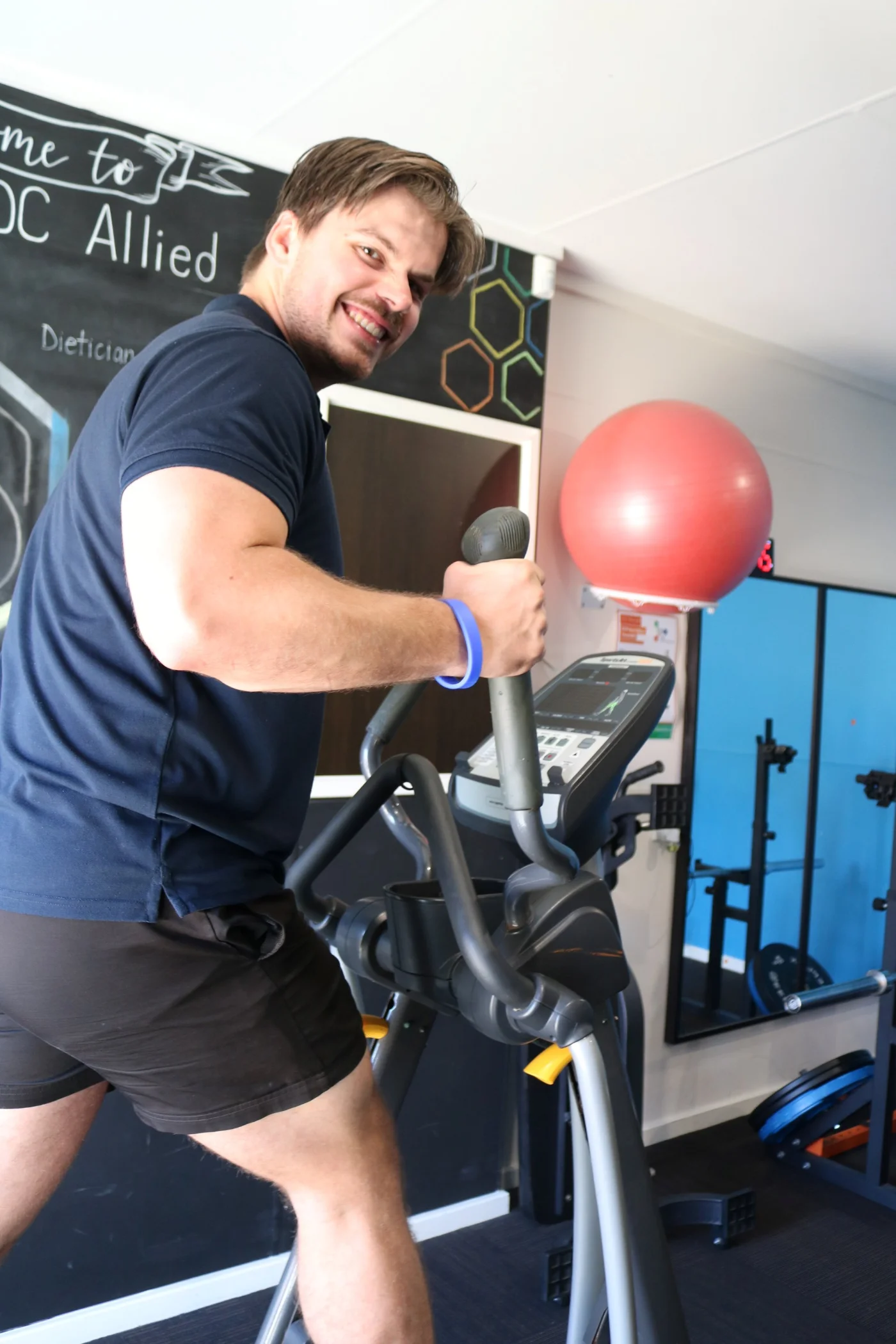
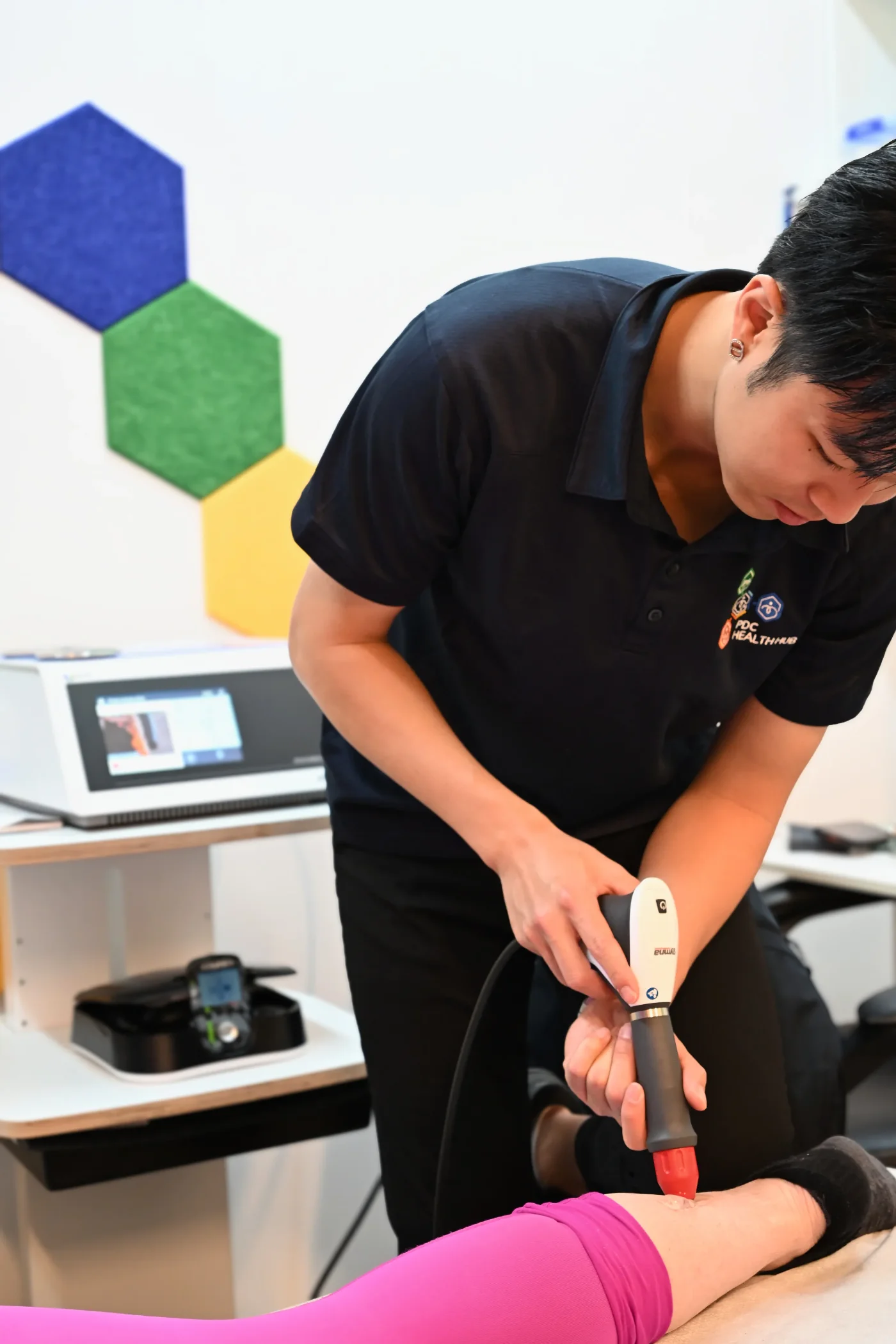

This page follows Australian guidance: the Victorian Department of Health advice on mobility, self care and functional decline for older people in hospital, Australia's physical activity and exercise guidelines for older Australians, and NSW Health's falls prevention guidance for older adults.
Faster than most people expect. Victorian health guidance states that older people in hospital are at risk of functional decline and deconditioning as early as two days after admission, and that bed rest leads to loss of muscle strength and an increased risk of falls. That is why hospitals now push to get people sitting out of bed, dressed and walking early rather than waiting until discharge.
It is common, and it is not something you have to accept. Functional decline is one of the most frequent harms for older people in hospital. A graded program rebuilds strength, balance and endurance in steps, and the targets are the tasks you have lost rather than abstract fitness. Start with an assessment so progress can be measured instead of guessed at.
Small and frequent at first. National guidance for older Australians suggests starting with 10 minutes of activity once or twice a day, increasing to 15 minutes twice a day after two weeks, and working towards at least 30 minutes of moderate intensity activity on most days. Fitness, strength, balance and flexibility are spread across the week, and the level only goes up once the last step has settled.
It reduces the likelihood of falls and fall related injuries, and it helps with the loss of confidence that comes with fear of falling. The part that matters most is exercise that genuinely challenges your balance, and it has to continue rather than stop at discharge. NSW Health's falls prevention guidance for older adults suggests at least two hours a week, or about 20 minutes a day, kept up for six months or more. No program removes the risk entirely.
Yes. We provide services to residential aged care facilities and through Support at Home, so exercise physiology, physiotherapy and dietetics can happen where the person lives rather than needing a trip to a clinic. Sessions can be one to one or in a small supervised group. Telehealth is also available across all disciplines.
Tell us what is going on and we will point you to the right discipline, or to more than one. Most people start with a single appointment and leave with a plan the rest of the team can see.
Or go straight to a service
Phone (08) 6110 0570 · Medicare, NDIS, DVA and private options across our services
For GPs and health professionals
Send an online referral in under two minutes. One referral reaches every discipline at PDC Health Hub.