Follow us

Search
For health professionalsContact usPress Enter to search. For products, try the shop filter.
 (08) 6110 0570
 admin@pdchealthhub.com.au
Press Enter to search. For products, try the shop filter.
(08) 6110 0570admin@pdchealthhub.com.auMost heel pain comes from the band of tissue under your foot, not the bony heel spur. Podiatry care focuses on stretching, footwear and orthoses to settle it.
Most heel pain, especially the sharp pain under the heel with your first steps in the morning, comes from the thick band of tissue along the sole of the foot (plantar fasciopathy, often called plantar fasciitis).1 A heel spur is a small bony growth on the heel bone. Spurs are common, many people with a spur have no pain, and the spur stays on an X-ray after the pain has settled, so it is often not the real cause.2,3
Podiatry care starts with finding what is loading your heel, including your footwear, activity and calf flexibility. Stretching the plantar fascia and calf muscles is recommended.3 Supportive footwear, heel pads, taping and orthoses (shoe inserts) are often added, and orthoses work best alongside other treatments. An off-the-shelf insert can be as useful as a custom one.3,4 Most heel pain improves over weeks to months with this kind of care.2,4
PHOTO NEEDED · Add a Hero Image to this condition in the CMS: a PDC clinician with a client, natural light, no identifiable health information on screen
Symptoms are a guide, not a diagnosis. Your GP confirms the diagnosis; our team helps you manage it day to day.
The teams and services that most often support people with this condition. They work from one shared plan, and one GP referral reaches all of them.

Our care follows current Australian consumer guidance on heel pain and the 2023 JOSPT clinical practice guideline for plantar heel pain, used because Australian guidance on treatment detail is limited.
Often not. Heel spurs are common, many people with a spur have no pain, and the spur remains after pain settles. Most heel pain comes from the plantar fascia, the band of tissue under the foot. A podiatrist can work out what is behind your pain.
First-line care is stretching the plantar fascia and calf, supportive footwear and managing how much load your heel takes. Heel pads, taping or orthoses are often added alongside these, rather than used on their own. Your podiatrist builds a plan around your feet and activity.
It often takes weeks to months, and everyone recovers at a different pace. Most people improve with consistent stretching and supportive footwear. If pain has not settled after about eight weeks, or limits your daily activities, see your doctor or podiatrist.
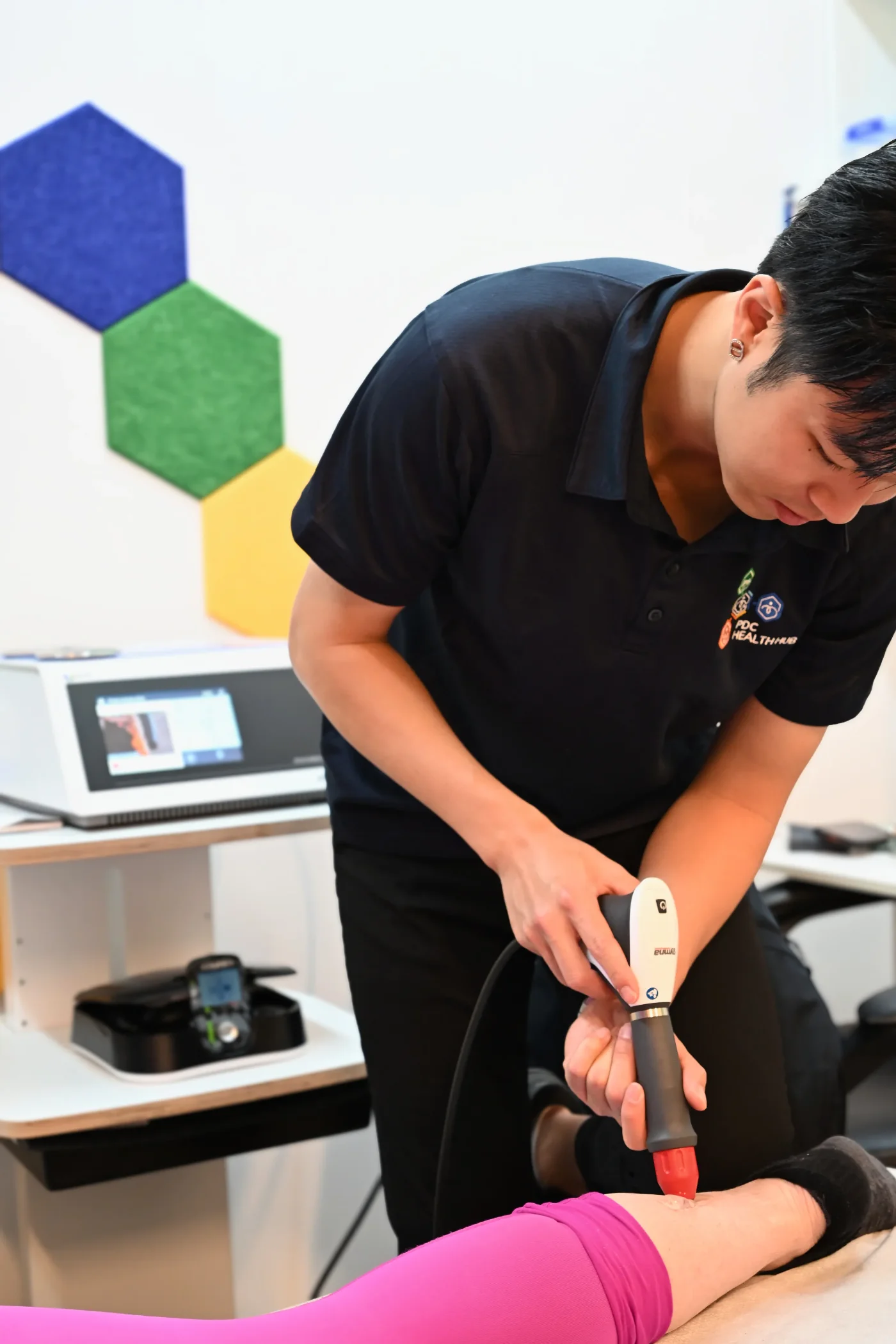
Not usually at the start. Stretching, footwear and orthoses are the first steps. Shockwave therapy is available here and can be added when pain continues, alongside your exercise plan. We do not give steroid injections, so your podiatrist will liaise with your GP if you want to discuss one.
No referral is needed for private appointments. A Medicare rebate needs a GP Chronic Condition Management Plan and a GP referral, and applies to up to five eligible allied health services a calendar year. Private health extras often cover podiatry, and DVA or NDIS funding may apply in some cases.
Tell us what is going on and we will point you to the right discipline, or to more than one. Most people start with a single appointment and leave with a plan the rest of the team can see.
Or go straight to a service
Phone (08) 6110 0570 · Medicare, NDIS, DVA and private options across our services
For GPs and health professionals
Send an online referral in under two minutes. One referral reaches every discipline at PDC Health Hub.
