Follow us

Search
For health professionalsContact usPress Enter to search. For products, try the shop filter.
 (08) 6110 0570
 admin@pdchealthhub.com.au
Press Enter to search. For products, try the shop filter.
(08) 6110 0570admin@pdchealthhub.com.auPain in the ball of the foot is usually a pressure problem, most often metatarsalgia or Morton's neuroma. Our Perth podiatrists work out which structure is sore and take the pressure off it.
Forefoot pain (metatarsalgia) means pain in the ball of the foot, so it is a description rather than one diagnosis.1 It is often brought on by exercise such as running, and tight shoes, foot shape, hard or cracked skin and arthritis can all play a part.1 Morton's neuroma is one specific cause, a thickening of tissue around an irritated or damaged nerve between the toe bones, which typically gives shooting, stabbing or burning pain between the third and fourth toes and a feeling of a pebble underfoot.2 A single hot, red, swollen big toe joint may be gout, but a joint infection looks the same and needs urgent assessment.5,7
Care starts by taking load off the sore structure. That means roomy, comfortable shoes with a low heel and a soft sole, avoiding high heels and tight, pointed shoes, resting and elevating the foot, easing off the activity that aggravates it, and soft insoles or pads inside the shoe.1,2 A podiatrist can prescribe inserts for your shoes and check them against the shoes you actually wear.3 You do not need a referral to book with ours. Physiotherapy helps where calf tightness, weakness or loading technique is driving it, and PDC physiotherapists see people aged 16 and over.
The diagnosis is usually made by examining the foot, so imaging is not always needed.2 A scan earns its place when the pain began suddenly after an injury or a jump in training, when a stress fracture is possible, when symptoms are not settling, or when a surgical opinion is being considered. PDC physiotherapists can refer directly for imaging, while prescriptions, injections and specialist referrals stay with your GP. If you live with diabetes, foot pain deserves earlier attention, because reduced feeling and blood flow mean injuries can go unnoticed and heal slowly, and a red, hot, swollen foot needs immediate referral.4,6
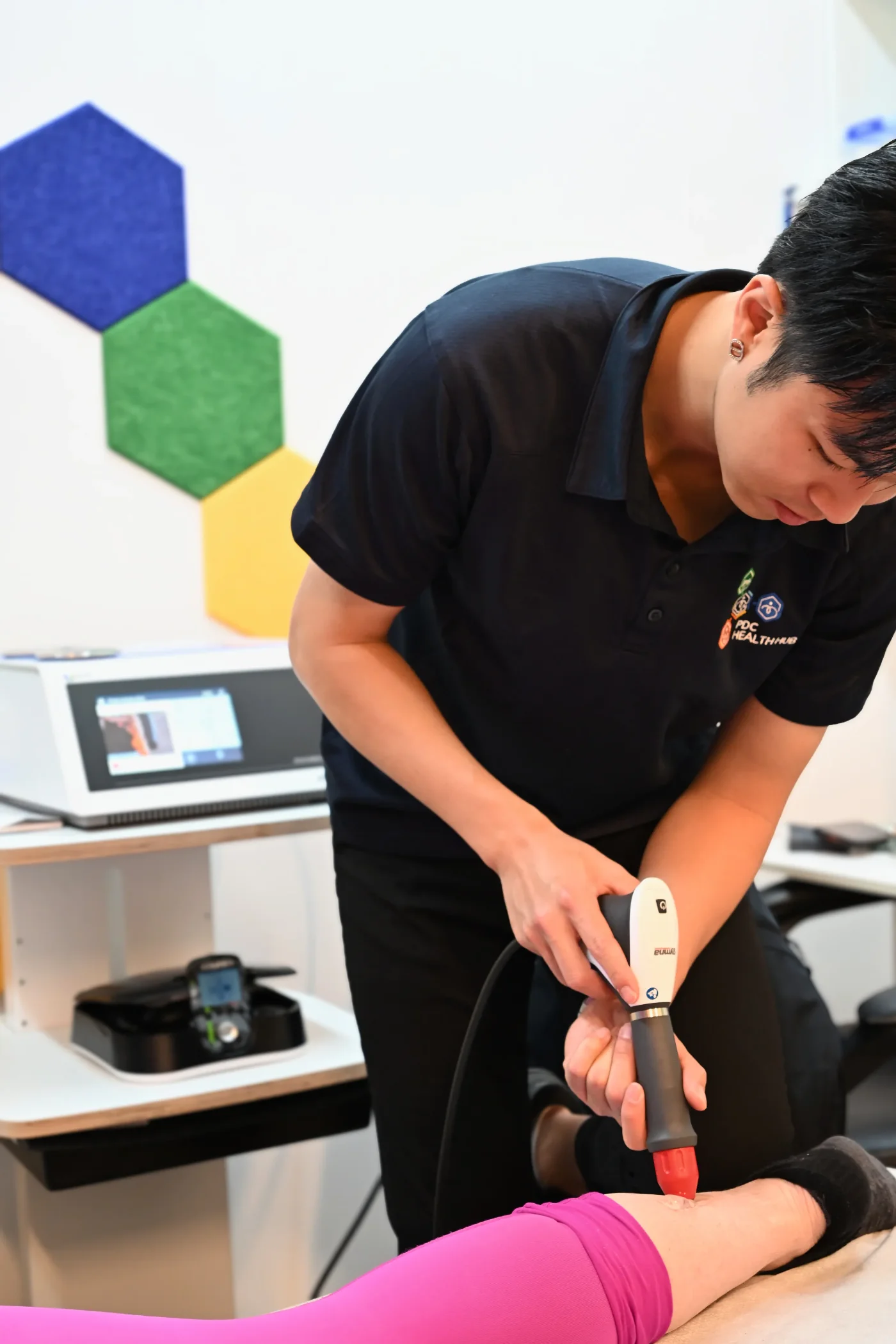
PHOTO NEEDED · Add a Hero Image to this condition in the CMS: a PDC clinician with a client, natural light, no identifiable health information on screen
Symptoms are a guide, not a diagnosis. Your GP confirms the diagnosis; our team helps you manage it day to day.
The teams and services that most often support people with this condition. They work from one shared plan, and one GP referral reaches all of them.


Australian consumer guidance on forefoot pain and Morton's neuroma is thin, so this page follows United Kingdom National Health Service guidance for those two conditions, with its NHS 111 triage step read as a same day Australian appointment, and Australian sources for the podiatrist's role, for gout and septic arthritis as look alikes, and for the diabetes foot pathways from the RACGP and the NDSS.
Usually because too much pressure is going through a small area. Running, long hours standing, tight or pointed shoes, high heels, foot shape and hard skin all concentrate load under the forefoot, and arthritis can contribute. A podiatrist works out which structure is sore and what is loading it, then changes the load.
Metatarsalgia just means pain in the ball of the foot, so it is a description rather than a cause. Morton's neuroma is one specific cause, an irritated or damaged nerve between the toe bones, and it tends to give shooting, stabbing or burning pain between the third and fourth toes with a pebble under the foot. The examination usually separates them.
Often not. The diagnosis is normally made by examining the foot and hearing how the pain behaves. A scan becomes useful if the pain started suddenly after an injury or a jump in training, if a stress fracture is possible, if things are not settling, or if a surgical opinion is on the table. Our physiotherapists can refer directly for imaging.
Soft insoles, metatarsal pads and prescribed orthoses can take pressure off the sore area, and many people get useful relief. They work alongside footwear changes and a sensible return to activity rather than instead of them. Your podiatrist prescribes them and checks them in the shoes you actually wear, and if nothing is changing we reassess rather than persist.
Steroid injections and surgery are options for very severe symptoms or when other treatments have not worked, and both are decisions for your GP and a specialist. PDC clinicians do not prescribe or inject. We can set out clearly what has been tried and why, which makes that referral conversation quicker.
Tell us what is going on and we will point you to the right discipline, or to more than one. Most people start with a single appointment and leave with a plan the rest of the team can see.
Or go straight to a service
Phone (08) 6110 0570 · Medicare, NDIS, DVA and private options across our services
For GPs and health professionals
Send an online referral in under two minutes. One referral reaches every discipline at PDC Health Hub.
