Follow us

Search
For health professionalsContact usPress Enter to search. For products, try the shop filter.
 (08) 6110 0570
 admin@pdchealthhub.com.au
Press Enter to search. For products, try the shop filter.
(08) 6110 0570admin@pdchealthhub.com.auThis page is about pregnancy when you already live with type 1 or type 2 diabetes, and about planning one. Planning early and tighter glucose targets lower the risks.
This page is about pregnancy when you already live with type 1 or type 2 diabetes, which clinicians call pre-existing diabetes in pregnancy. It is not about gestational diabetes, which is high glucose first picked up during the pregnancy itself and is classified separately under Australian guidance.5 PDC has a separate gestational diabetes page for that. People living with type 1 or type 2 diabetes can have a healthy pregnancy and a healthy baby, and the step that helps most is deciding to plan rather than waiting.1
Planning matters because the baby's major organs form in the first eight weeks, often before a pregnancy has even been confirmed.2 Glucose that sits out of range before and in early pregnancy raises the risk of miscarriage and of problems with the baby's development, along with high blood pressure, pre-eclampsia, a large baby and an early delivery.1 Australian guidance is to have a diabetes and general health review at least three to six months before you start trying, and to keep using contraception until you and your team agree you are ready.1,2
Targets are tighter in pregnancy than at other times, and they are set with your team rather than read off a page.1,3 A medicine review before pregnancy is a prescriber decision: your GP or specialist checks everything you take for pregnancy safety, including the folic acid dose, which is higher for people living with diabetes.1 Expect more frequent reviews, more glucose checking, and insulin doses that change often.1 Continuous or flash glucose monitoring is advised in type 1 diabetes before and during pregnancy, and subsidy may be available through the NDSS after assessment.1
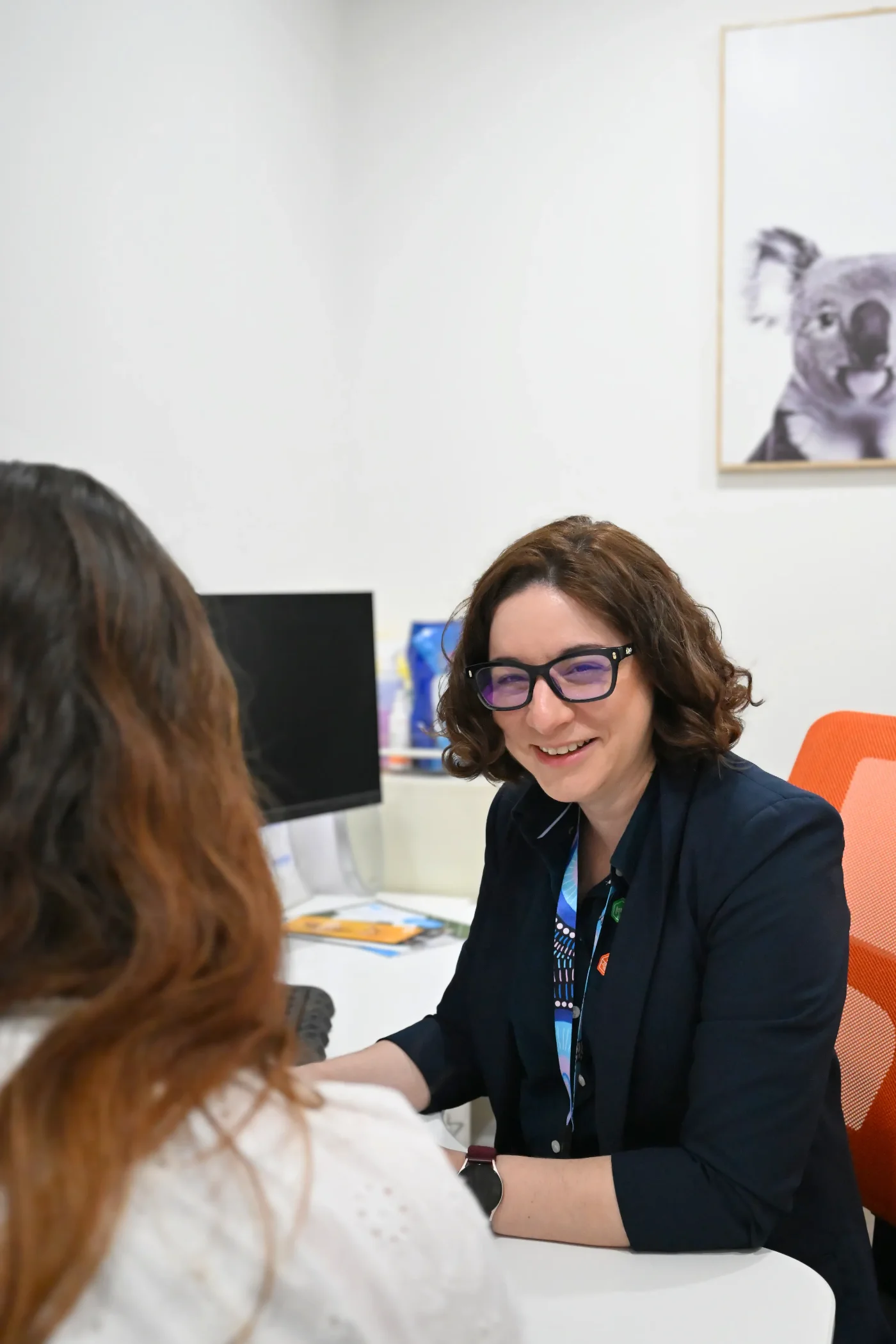
PHOTO NEEDED · Add a Hero Image to this condition in the CMS: a PDC clinician with a client, natural light, no identifiable health information on screen

Symptoms are a guide, not a diagnosis. Your GP confirms the diagnosis; our team helps you manage it day to day.
The teams and services that most often support people with this condition. They work from one shared plan, and one GP referral reaches all of them.

This page follows NDSS guidance on pregnancy with pre-existing type 1 or type 2 diabetes, and uses the Australasian Diabetes in Pregnancy Society 2025 consensus recommendations for how gestational diabetes is classified separately. Advice on reduced or changed baby movements follows the Australian clinical practice guideline from the Centre of Research Excellence in Stillbirth and the Perinatal Society of Australia and New Zealand, and emergency advice follows Healthdirect.
No. Gestational diabetes is high glucose first found during the pregnancy, and Australian guidance classifies it separately from diabetes you already had. This page is for people who were living with type 1 or type 2 diabetes before they became pregnant. If you were diagnosed during this pregnancy, our gestational diabetes page is the right one.
Australian guidance is a diabetes and general health review at least three to six months before you start trying. That leaves time to check your HbA1c, screen your eyes, kidneys and nerves, check your blood pressure, review your medicines and start high dose folic acid. Keep using contraception until you and your team agree you are ready, because pregnancy is possible as soon as you stop.
Possibly, and that is a prescriber decision. Your GP or specialist reviews everything you take for pregnancy safety before you conceive, and may change how you monitor, which medicines you take or what your targets are. We do not prescribe or stop medicines. We can prepare the glucose information your prescriber needs and then support you through the changes they make.
They are tighter than outside pregnancy and they are individual, so your diabetes in pregnancy team sets them with you. Before conception, Australian guidance points to an HbA1c of 6.5 per cent (48 mmol/mol) or less, with your personal target being the lowest you can reach safely without frequent hypos. After the birth your target range goes back up, to reduce hypo risk while you establish feeding.
Yes. Glucose can drop quickly during and after a feed, much as it can with physical activity, so keep hypo treatment within reach every time you feed. Insulin doses are usually lower after the birth than during pregnancy and need close review in the first month. Only insulin and metformin are considered suitable diabetes medicines while breastfeeding, and your prescriber decides what you take.
Tell us what is going on and we will point you to the right discipline, or to more than one. Most people start with a single appointment and leave with a plan the rest of the team can see.
Or go straight to a service
Phone (08) 6110 0570 · Medicare, NDIS, DVA and private options across our services
For GPs and health professionals
Send an online referral in under two minutes. One referral reaches every discipline at PDC Health Hub.
