Follow us

Search
For health professionalsContact usPress Enter to search. For products, try the shop filter.
 (08) 6110 0570
 admin@pdchealthhub.com.au
Press Enter to search. For products, try the shop filter.
(08) 6110 0570admin@pdchealthhub.com.auPen needles and insulin syringes are free through the NDSS for registered people who use insulin. Here are the brands and sizes on the scheme, the limits, the access form, and how to get the most from every needle.
State and territory governments cover the NDSS co-payment on pen needles and syringes, so they cost nothing for registered people who use insulin, whatever card you hold. They come through an NDSS Access Point, usually a community pharmacy. For PDC clients that is Bedford Pharmacy 777, and they can go in your BlueLoop box.
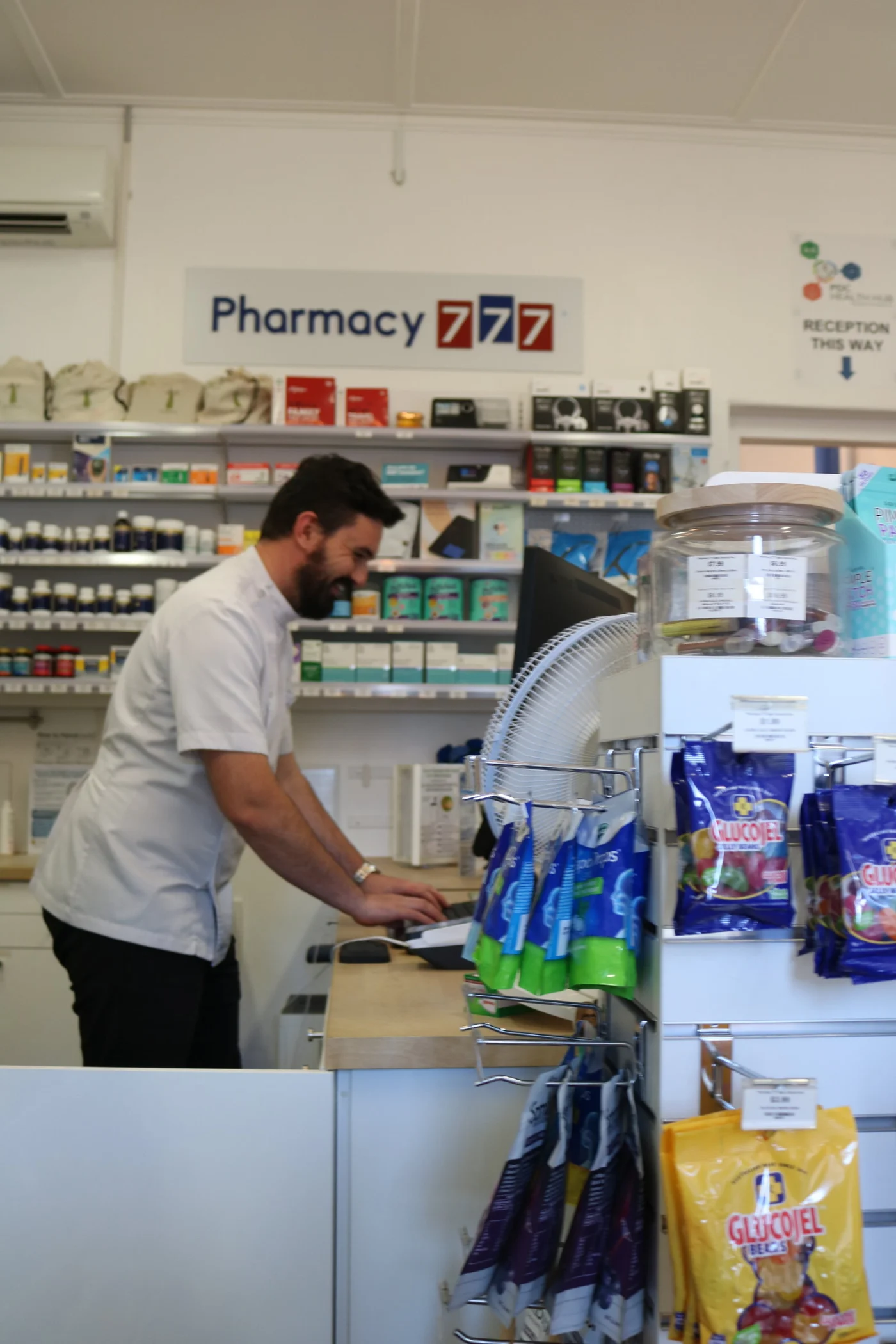
PHOTO NEEDED · Pharmacist at the Bedford Pharmacy 777 counter handing a client boxes of pen needles, client's face visible, no patient details on screen. Landscape 4:3.
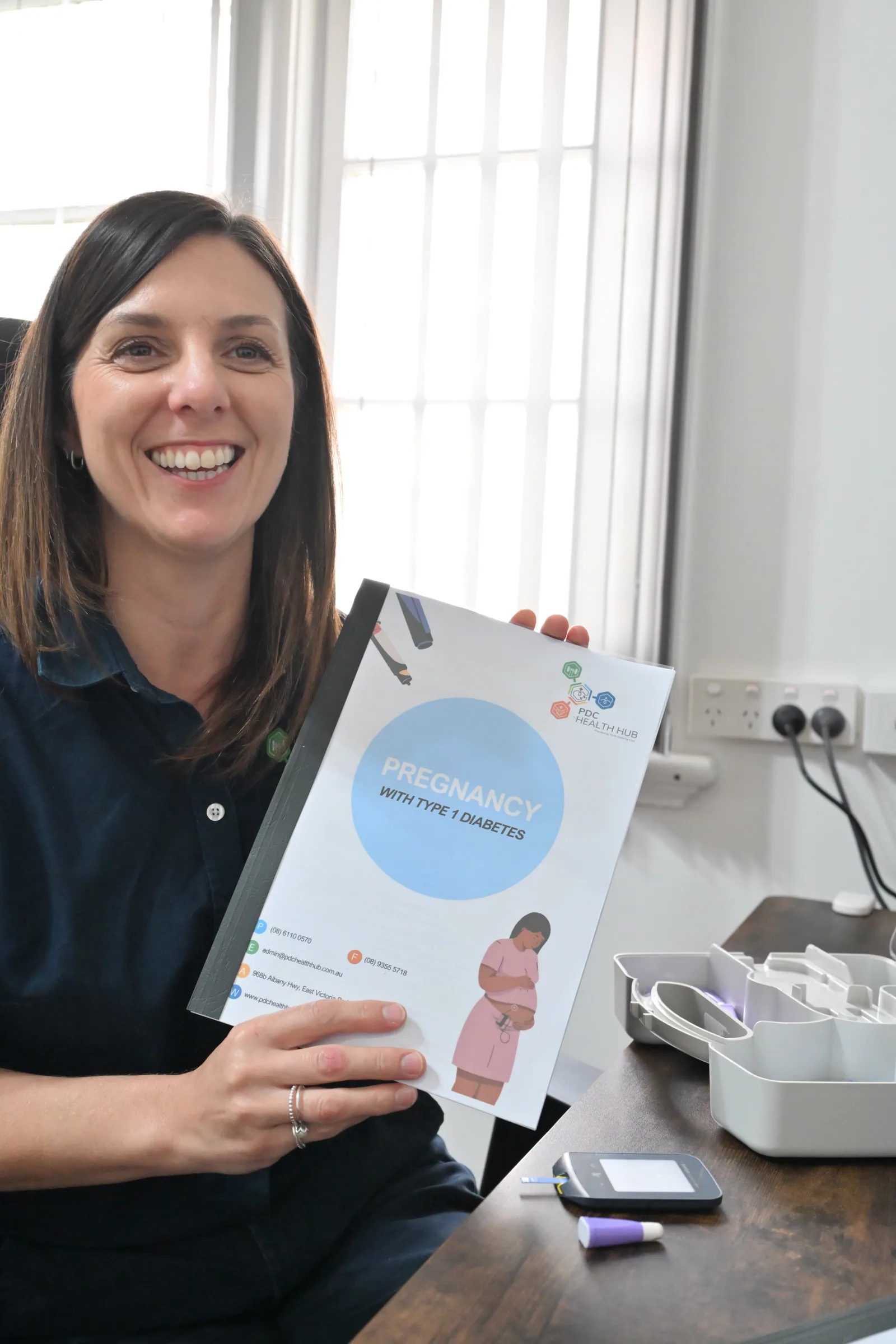
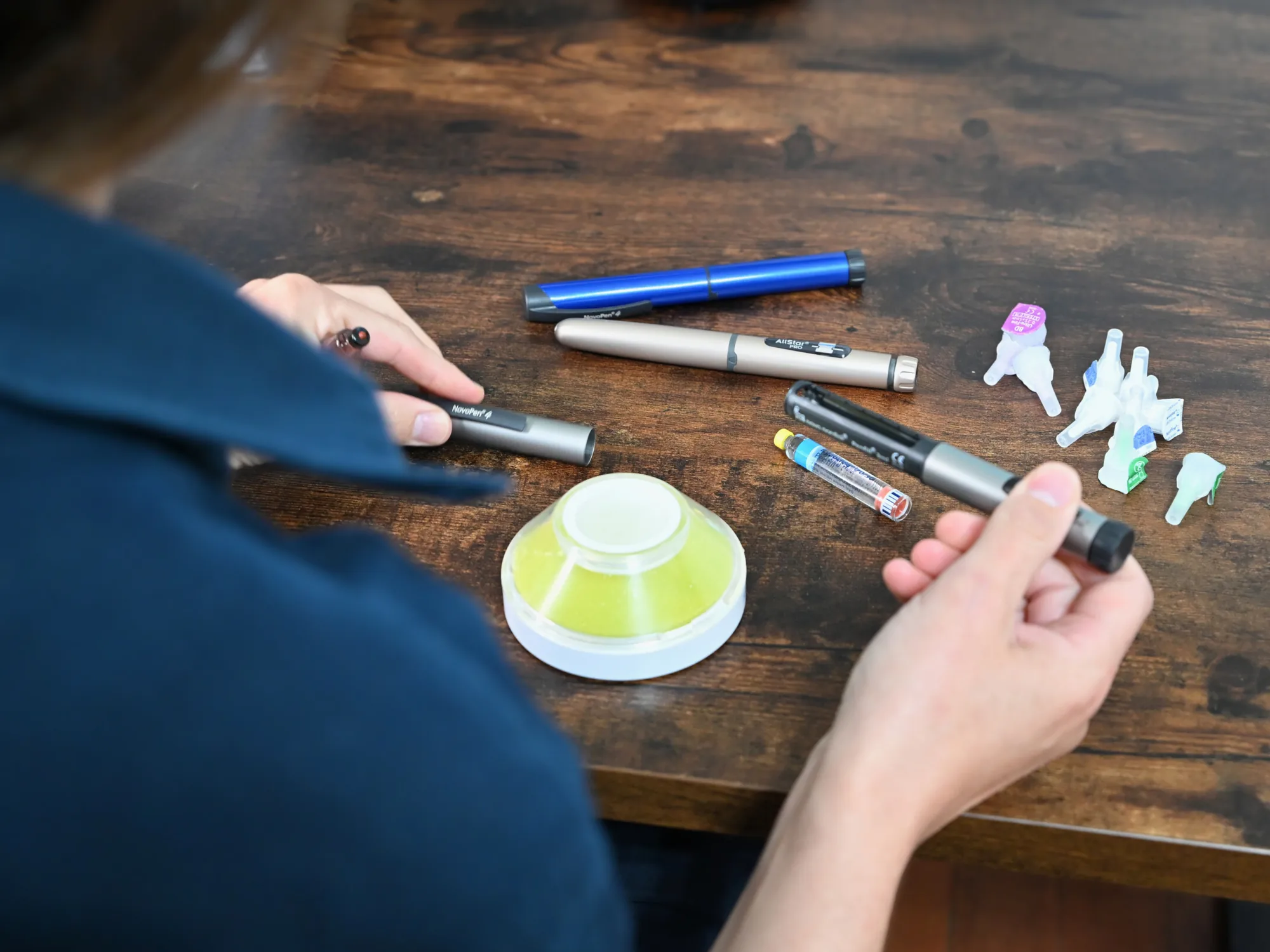
PHOTO NEEDED · A client and a credentialled diabetes educator at a clinic desk, the educator holding an insulin pen with a pen needle attached, both faces visible. Landscape 4:3.
There is no co-payment on pen needles or syringes. General, concession and DVA registrants all pay nothing, up to 1,200 in any 180-day period.
PHOTO NEEDED · Three pen needles of different lengths lined up beside a ruler on a white bench, no brand names readable. Landscape 4:3.
A 4mm pen needle reaches the fat layer under the skin for most adults and children, whatever their body size. Longer needles are more likely to reach muscle.
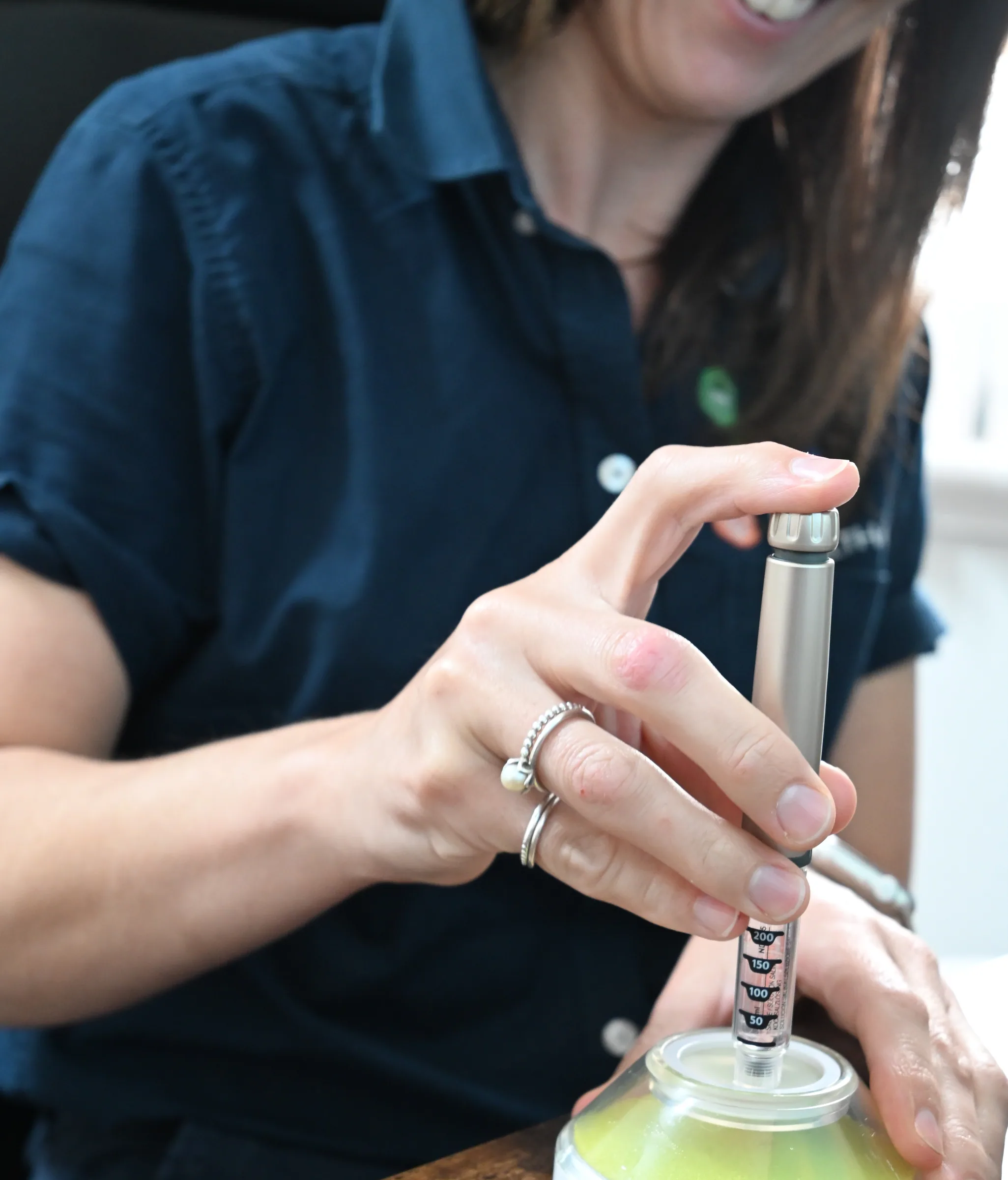
PHOTO NEEDED · A used pen needle being dropped into a yellow sharps container on a kitchen bench. Landscape 4:3.
A new needle every time keeps injections comfortable. A reused needle blunts, bends and can leave lumps under the skin.
Every brand on the July 2026 NDSS order form, with the lengths it comes in. All are single use, 100 to a box, and free for registered people who use insulin.
PHOTO NEEDED · A box of Embecta (BD) pen needles beside an insulin pen, product clearly shown. White background, 1200px wide.
PHOTO NEEDED · A box of NovoFine pen needles beside an insulin pen, product clearly shown. White background, 1200px wide.
PHOTO NEEDED · A box of Unifine Pentips pen needles beside an insulin pen, product clearly shown. White background, 1200px wide.
PHOTO NEEDED · A box of mylife Clickfine pen needles beside an insulin pen, product clearly shown. White background, 1200px wide.
PHOTO NEEDED · A box of Insupen Advanced pen needles beside an insulin pen, product clearly shown. White background, 1200px wide.
PHOTO NEEDED · A box of Droplet pen needles beside an insulin pen, product clearly shown. White background, 1200px wide.
PHOTO NEEDED · A box of Drew's Daily Dose pen needles beside an insulin pen, product clearly shown. White background, 1200px wide.
PHOTO NEEDED · A box of BD Ultra-Fine insulin syringes with one syringe beside an insulin vial, product clearly shown. White background, 1200px wide.
Pen needles and syringes follow from your NDSS registration, as long as the NDSS knows you use insulin. These are the rules as published in July 2026.
You can get free pen needles and syringes at any NDSS Access Point. Show your NDSS card, or your Medicare card if the NDSS card has not arrived yet.
Tell the NDSS first. Your health professional completes a Syringe or Pen Needle Access Form (NDSSFRM009) and can submit it online, or you can send a copy of your original insulin prescription. Once access is approved, you can order.
A health professional with a current Medicare provider number, a credentialled diabetes educator with a current ADEA CDE number, or a practice nurse with current Ahpra registration.
The July 2026 access form lists insulin as the only approved medicine. Needles for other injectable diabetes medicines are not supplied free through the NDSS. Ask our pharmacy what comes in the pack and what you may need to buy.
Up to 1,200 pen needles and syringes combined in any 180-day period. If you need more, call the NDSS Helpline on 1800 637 700 to discuss it.
Registration is free and lasts for life. Your GP, practice nurse, nurse practitioner, endocrinologist, credentialled diabetes educator or Aboriginal health practitioner registers you. You need a Medicare or DVA card, or to be eligible for one.
Based on NDSS guidance updated July 2026, checked 19 September 2026 and reviewed monthly.
Our credentialled diabetes educators can certify your access form and check your injection technique in the same appointment.
Book a CDE consultInsulin works best in the fat layer under the skin. The needle length decides where it goes, and a few habits make every injection more comfortable and more reliable.
Illustrative only. Skin is about 2mm thick in most adults. The fat layer varies from person to person and from site to site.
Use a new pen needle for every injection. Remove both caps, and keep the outer cap to unscrew the needle afterwards.
Dial 2 units and press them into the air to check insulin is flowing, then dial your dose.
Insert the needle at 90 degrees, press the button all the way, and count slowly to 10 before you remove it.
Unscrew the needle after each injection and put it in an approved sharps container. Leaving it on lets air in and insulin leak out.
Most people do well on a short needle. These are the points our diabetes educators check at an injection review.
A 4mm pen needle, inserted at 90 degrees, reaches the fat layer for most adults and children whatever their body size. International injection guidelines recommend it as the starting length.
Young children and very lean adults may need a gently lifted skin fold, even with a 4mm needle. With longer needles a lift, or an angled injection, matters more. Your educator will show you.
The higher the gauge, the thinner the needle, so 32G is thinner than 29G. Thinner needles can feel more comfortable. All syringes on the scheme are 31G.
Move each injection about a finger width from the last, and work around the tummy in a pattern. Injecting into the same spot causes firm lumps called lipohypertrophy.
Insulin is absorbed unpredictably from a lump, which can cause highs and lows. Avoid the area until it settles, and ask your educator to check your sites.
Let the insulin reach room temperature and check you are using a new needle. Some people find a slightly longer needle, such as 5mm or 6mm instead of 4mm, helps.
Used needles go in an approved sharps container. Ask our team at Bedford Pharmacy 777, or call the NDSS Helpline on 1800 637 700.
Call Bedford Pharmacy 777Other NDSS supplies, help with injecting, and keeping insulin safe.
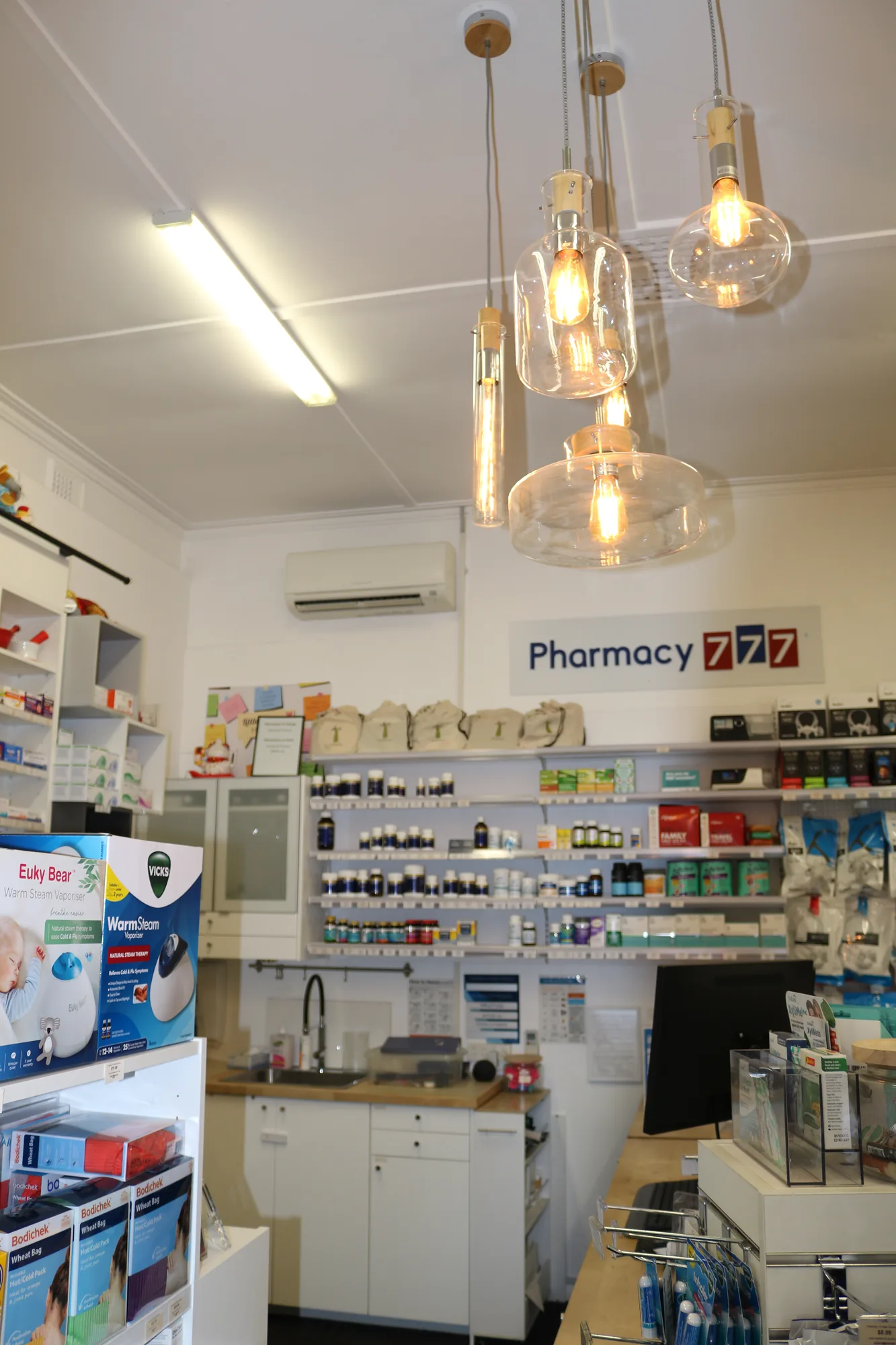
PHOTO NEEDED · Boxes of test strips, pen needles and pump consumables on a pharmacy shelf, no brand names readable. Landscape.
View NDSS consumablesPHOTO NEEDED · Credentialled diabetes educator watching a client inject with an insulin pen at a clinic desk, client's face visible.
View diabetes educationPHOTO NEEDED · A FRIO cooling wallet holding an insulin pen, on a beach bag. Landscape.
View insulin cooling and travelWhat people usually ask about pen needles and syringes.
Yes, for people registered with the NDSS who use insulin. State and territory governments cover the co-payment, so there is nothing to pay up to 1,200 in any 180-day period.
Yes. Pen needles are single use. A reused needle is blunter, can hurt and bruise, and adds to the risk of lumps under the skin.
Most pen needles use a standard thread and fit most insulin pens. The box lists the pens it fits, and our pharmacy team can check yours.
Not at the moment. The July 2026 NDSS access form lists insulin as the approved medicine. Ask our pharmacy what comes with your pen and what you may need to buy.
Put them in an approved sharps container, never in glass, cardboard, tins or plastic bottles. Take full containers to a designated disposal point, such as some public hospitals, participating pharmacies and medical centres, community sharps bins and some councils.
For most adults and children a 4mm pen needle is enough. If you are on a longer needle, or have lumps at your sites, ask your diabetes educator to review your technique before changing.
[1] National Diabetes Services Scheme. Pen needles and syringes; Subsidised products. ndss.com.au, pages updated July 2026, checked 19 September 2026.
[2] National Diabetes Services Scheme. Syringe or Pen Needle Access Form, NDSSFRM009, and Pen Needles/Syringes order form, NDSSFRM013, both version July 2026.
[3] National Diabetes Services Scheme. All about insulin fact sheet, version 1.0.0, 1 July 2026; NDSS Youth Zone, Insulin. Injection sites, rotation, lipohypertrophy, safety shot and sharps disposal.
[4] Frid AH, Kreugel G, Grassi G, et al. New insulin delivery recommendations. Mayo Clinic Proceedings 2016;91(9):1231-1255. International evidence on 4mm pen needles, skin folds and site rotation.
General information only, based on NDSS guidance checked 19 September 2026. NDSS rules and product lists change, so the NDSS Helpline on 1800 637 700 has the final word on your eligibility.
Book with one of our credentialled diabetes educators. We can certify your NDSS access form, check your injection sites and technique, and help you choose a needle. BlueLoop members get their pen needles in one box.
Or go straight to a service
Phone (08) 6110 0570 · NDSS products supplied by Bedford Pharmacy 777 · Medicare, NDIS, DVA and private options across our services
For GPs, endocrinologists and nurse practitioners
Use our online referral form and tick Diabetes Education. Our credentialled diabetes educators teach injection technique, certify the Syringe or Pen Needle Access Form, and send a summary back to you.